Nissan Cars
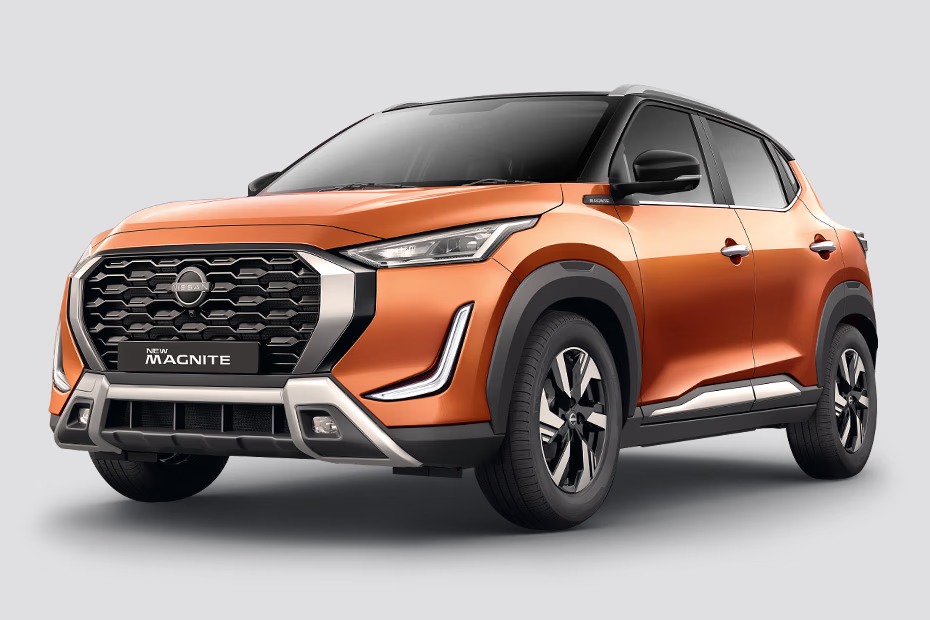
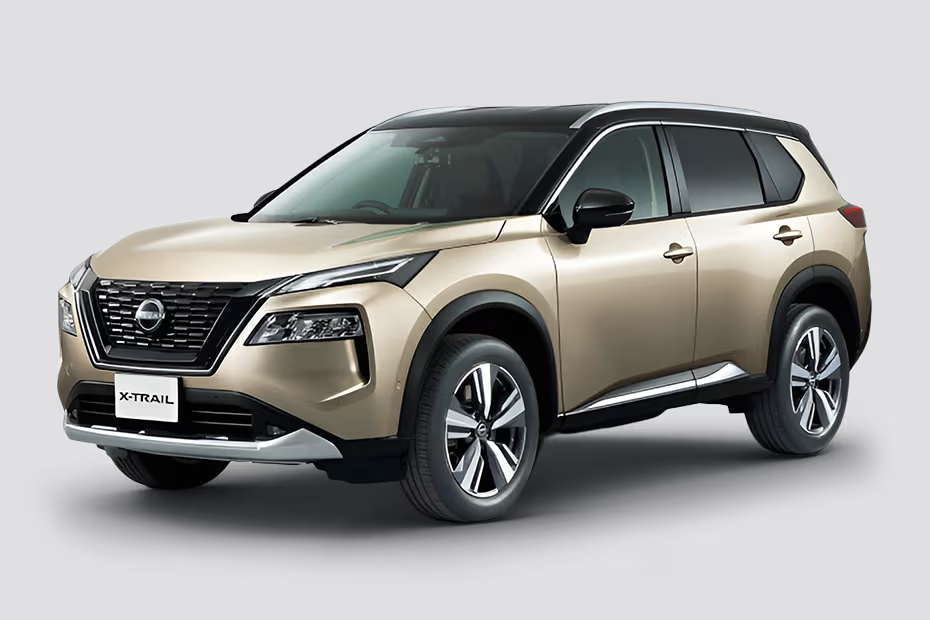
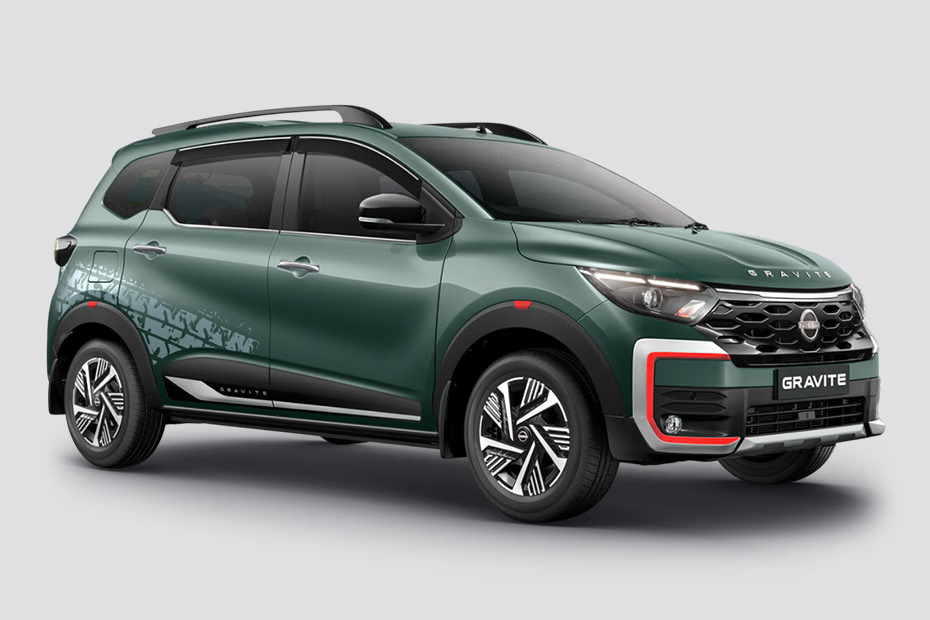
Nissan Cars in India currently include 3 models, comprising 2 SUVs and 1 MPV. The lineup starts with the Nissan Magnite, one of the most affordable compact SUVs in the country, followed by the Nissan Gravite MPV for family buyers, while the premium Nissan X-Trail sits at the top of the range. Nissan car prices in India start at ₹6.14 lakh and go up to ₹49.92 lakh (ex-showroom). Known for Japanese engineering, reliability, and value-for-money offerings, Nissan continues to strengthen its presence in the Indian market with a growing portfolio of SUVs and family-oriented vehicles.
If you are planning to buy a Nissan car under 10 Lakhs, then the Magnite is the best-selling as well as the cheapest car on offer by Nissan. We anticipate future launches like a new 7-seater SUV in the Indian market, followed by a lot of other SUVs along with an MPV.
Nissan Cars in India
Nissan currently sells 3 passenger vehicles in India, including the Nissan Magnite compact SUV, Nissan Gravite MPV, and Nissan X-Trail premium SUV. The Nissan Magnite has been positioned as a compact SUV and is also one of the most popular-selling cars from the Japanese manufacturer. It stands as the top-selling Nissan in India and offers its customers the luxurious, feature-rich and space-abundant Nissan X-Trail SUV.
With an imminent 7-seater Nissan car and also a compact MPV being developed by Nissan to suit the Indian market, they are ready to enter the burgeoning family-car market.
Nissan SUV Cars in India
Nissan's current SUV range includes:
- Nissan Magnite (Compact SUV)
- Nissan Gravite (MPV)
- Nissan X-Trail (Premium SUV)
Stylish and contemporary in design, these SUVs feature up-to-the-minute technology and come with the option of a turbo petrol engine (in certain models) at an attractive price tag, ideal for urban and highway use.
Nissan 7-Seater Car in India
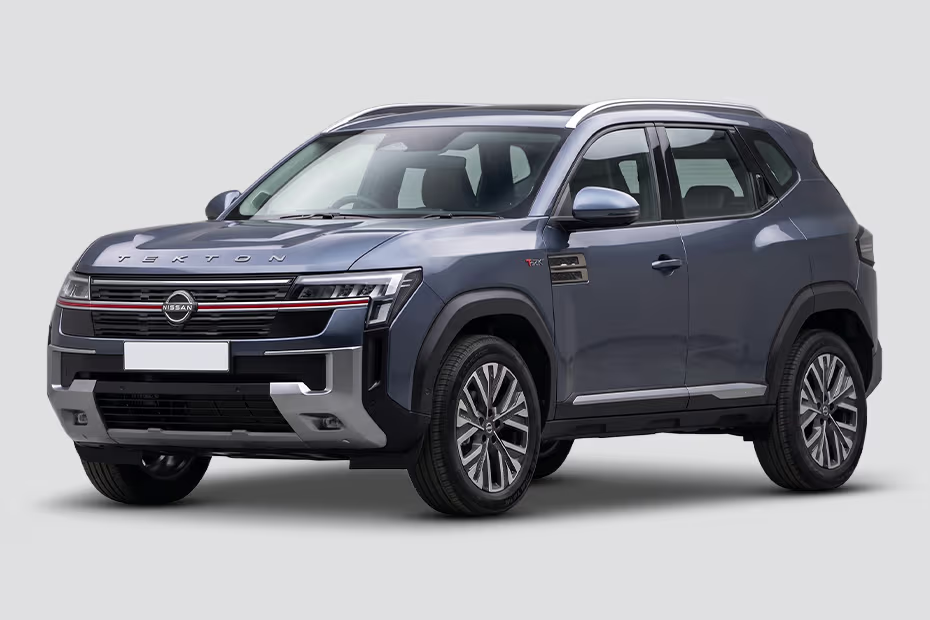
Nissan currently does not offer a mass-market 7-seater vehicle in India. However, the company is reportedly developing a new 7-seater SUV for the Indian market. The expected new model is to be a rival to models such as Hyundai Alcazar, Tata Safari, Mahindra XUV700 and MG Hector Plus.
Start of Operations in India
Nissan made its entry in the Indian automotive sector in 2005. The company has its manufacturing facility at Chennai, which has been set up under the Renault-Nissan Alliance. Nissan launched many models which are popular.
Today, India serves as an important production and export hub for Nissan's global operations.
Market Share
In India, Nissan occupies a particular space in the passenger vehicle space. With the introduction of the Magnite, the sales performance of the company has substantially boosted, and it has strengthened its hold in the extremely competitive compact SUV space.
Key Highlights of Nissan Cars
- Japanese engineering and reliability
- Affordable SUV and MPV lineup
- Strong value-for-money offerings
- Turbo-petrol engine technology
- Growing focus on SUVs and family vehicles
- Extensive Renault-Nissan Alliance support
Nissan Cars Price List (2026)
| Model | Price |
| Nissan Magnite | ₹6.14 Lakh |
| Nissan Gravite | ₹6.50–9.50 Lakh* |
| Nissan X-Trail | ₹49.92 Lakh |
| Nissan Compact MPV (Expected) | ₹10.00 Lakh |
| Nissan 7-Seater SUV (Expected) | ₹14.00 Lakh |
| Nissan Patrol (Expected) | ₹80.00 Lakh |
Nissan Cars vs Competitors
| Brand | Starting Price | Popular Models |
| Nissan | ₹6.14 Lakh | Magnite, X-Trail |
| Renault | ₹4.30 Lakh | Kwid, Kiger, Triber, Duster |
| Maruti Suzuki | ₹4.23 Lakh | Alto K10, Swift, Brezza |
| Hyundai | ₹5.98 Lakh | Grand i10 Nios, Creta, Venue |
| Tata Motors | ₹5.00 Lakh | Tiago, Punch, Nexon |
| Kia | ₹7.33 Lakh | Sonet, Seltos, Carens |
Nissan Car Models
Genuine Review To The Find Right Car

Nissan Car News
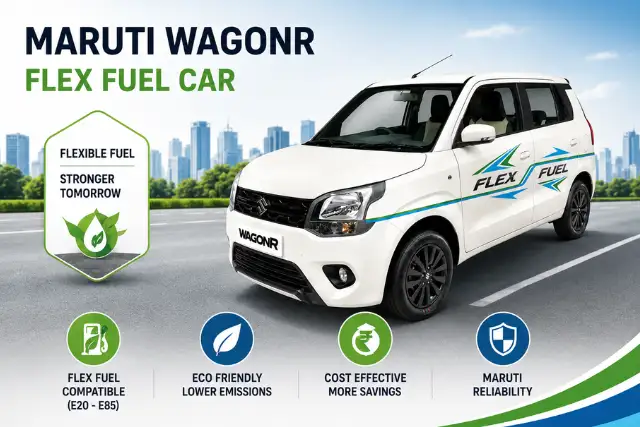
Maruti Unveils India's First Flex-Fuel Wagon R, Supports Ethanol Blends from E20 to E85

18 days ago
India has taken another major step toward cleaner and more sustainable transportation with the launch of the Maruti Suzuki Wagon R Flex Fuel, the country's first passenger car capable of running on ethanol-petrol blends ranging from E20 to E100. The vehicle was unveiled in the presence of Union Road Transport and Highways Minister Nitin Gadkari, Petroleum and Natural Gas Minister Hardeep Singh Puri, and Hisashi Takeuchi. Maruti Suzuki Wagon R Flex Fuel- the first passenger flex fuel car from India runs on different variants of ethanol-petrol mixes from E20 to up to E85 and targets to reduce dependency on petrol, lower emissions, and expand the ethanol fuel segment in India, which is growing at a rapid pace. To introduce this technology to the masses, Maruti Suzuki has selected India's most reliable hatchback- the Wagon R . And the output is an utterly functional family car that can run on variable ethanol-petrol mixes without demanding any manual intervention on the driver's part. Regardless of whether you are a current Wagon R owner, a car enthusiast, or just curious to learn about the future of fuel in India, here's everything you should learn to know. What Is Maruti Suzuki Wagon R Flex Fuel? Basically, the Wagon R Flex Fuel is just a modification/tuned-up version of the Wagon R hatchback. Where a petrol-powered car would run only on a petrol blend, the flex-fuel variant can run on various blends of ethanol-petrol. The basic idea behind a FFV is that it recognises the blend ratio by itself and applies the changes required by its engine automatically. You will not need to bother whether the fuel blend consists of more petrol or more ethanol. Here are a few typical fuel blends that this flex-fuel car would be able to run on: E20 (20% Ethanol + 80% Petrol) E50 (50% Ethanol + 50% Petrol) E85 (85% Ethanol + 15% Petrol) According to Maruti Suzuki, the Wagon R Flex fuel was developed keeping in mind India’s long-term goals of energy and bio-fuel security. What Is a Flex-Fuel Vehicle (FFV)? A Flex-Fuel Vehicle (FFV) is a car that can run on different blends of petrol and ethanol. It automatically detects the fuel mixture and adjusts the engine settings, so drivers don't need to make any manual changes. This technology allows vehicles like the Maruti Suzuki Wagon R Flex Fuel to use fuel blends ranging from E20 to E85, offering greater fuel flexibility while supporting cleaner and more sustainable mobility solutions. Why Is the Wagon R Flex Fuel Important? Wagon R Flex Fuel marks a major evolution that could define India's transportation fuel future: Less dependence on imported oil Most crude oil for India is imported, whereas ethanol is produced domestically from renewable agricultural feedstock like sugarcane. Lower Carbon emissions Greater amounts of ethanol can contribute to reduced greenhouse emissions over traditional petrol vehicles. Farmer benefits The higher amount of ethanol can lead to increased demand and benefit India's agriculture sector. Forward-thinking technology As ethanol infrastructure grows,flex-fuel vehicles are poised to become more accessible in day-to-day use. How Does Wagon R Flex Fuel Work? The technology behind a flex-fuel vehicle is more advanced than simply filling the tank with ethanol. To handle higher ethanol concentrations, manufacturers typically upgrade: Fuel injectors Fuel pumps Fuel lines Engine management software Ethanol sensors Engine calibration systems The vehicle would then be able to run reliably and perform well even with different proportions of ethanol. Wagon R Flex Fuel Specifications Though the exact specs haven't been revealed by Maruti Suzuki so far, word is that the car would be based on the familiar Wagon R model. It is expected to be powered by a reworked K-series engine designed to handle fuel blends. Some of the known features: Feature Expected Details Fuel Compatibility E20 to E85 (and higher compatibility in some reports) Vehicle Type Hatchback Transmission Manual/Automatic (expected) Seating Capacity 5 Persons Fuel Type Ethanol-Petrol Blends Brand Maruti Suzuki Will the Wagon R Flex Fuel Save Money? A commonly asked question is: Is Flex Fuel cheaper than petrol? In all likelihood, yes. Ethanol is cheaper than petrol, and if it is competitively priced and becomes widely available, then a petrol car will not necessarily be cheaper to run. Your fuel savings will depend on: Local prices of fuel Availability of ethanol Conditions under which you drive Car's fuel efficiency Because ethanol has less energy per litre than petrol, the actual fuel economy may change when driving a car that uses a high proportion of ethanol. Is Ethanol Cheaper Than Petrol? In many cases, ethanol is cheaper than petrol, which can help reduce fuel costs. However, the actual savings depend on factors such as local fuel prices, ethanol availability, and your vehicle's fuel efficiency. Since ethanol contains less energy per litre than petrol, mileage may vary when using higher ethanol blends. Wagon R Flex Fuel vs Regular Wagon R Feature Wagon R Petrol Wagon R Flex Fuel Fuel Compatibility Petrol/E20 Multiple Ethanol Blends Emissions Standard Lower Carbon Footprint Future Readiness Moderate High Fuel Flexibility Limited Excellent Ethanol Compatibility Basic Advanced Is India Ready for Flex-Fuel Cars? Fueling infrastructure remains a critical challenge. While the government is accelerating progress towards ethanol-powered mobility, ethanol dispensing outlets are not as numerous as conventional petrol pumps, and it is anticipated that this figure will surge in the coming few years. Higher ethanol blends have to be made readily available to ensure the proliferation of flex fuel vehicles. Should You Buy the Wagon R Flex Fuel? The answer depends on your driving needs. You should consider the Wagon R Flex Fuel if: You want a future-ready vehicle You support cleaner fuel technologies Ethanol fuel becomes available in your area You are looking for potentially lower fuel costs You may want to wait if: Ethanol stations are unavailable near you You prefer proven long-term infrastructure Pricing details are a deciding factor Check Vehicle Details Before Buying Any Car Before purchasing any used or new vehicle, always verify: RC details Vehicle ownership history Challan records Registration information VahanKhoj helps you instantly check vehicle information online using the vehicle registration number. Quick CTA: Check RC details, owner information, and challan records instantly on VahanKhoj before making your next vehicle purchase. Key Takeaways Maruti Suzuki Wagon R Flex Fuel is the first flex-fuel passenger vehicle. It runs on any combination of ethanol-petrol blend ranging from E20 to E85. Flex-fuel offers a way of reducing reliance on imports. Lower emissions and energy security would be an effect of ethanol-fuelled mobility. Expansion of infrastructure would be key to its widespread use. Wagon R Flex Fuel might be just the beginning of more flex fuel vehicles in the country. Frequently Asked Questions (FAQs) What Is the Price of the Maruti Suzuki Wagon R Flex Fuel? Maruti Suzuki has showcased and launched the Wagon R Flex Fuel as part of its alternative fuel strategy. However, the company has not yet announced a mass-market retail price or nationwide availability schedule. Buyers should watch for official updates from Maruti Suzuki regarding pricing and bookings. What exactly is a Maruti Suzuki Wagon R Flex Fuel? This is basically a flex-fuel-powered version of the existing Wagon R, which could be fueled with different blends of ethanol and petrol, not only petrol as it is in the current Wagon R. Can a Wagon R Flex Fuel be filled up with petrol? Of course, due to the flexibility feature, it can be filled with any kind of blend. It could be fueled in any mix. What is E85 fuel? E85 is actually a mix of ethanol and petrol, which could have a maximum 85% of ethanol while minimum of petrol (15%). Is Wagon R Flex Fuel launched in India? The Wagon R Flex Fuel has been launched in India by Maruti Suzuki. It has even become the first flex fuel-powered passenger car in India. But the availability would be dependent on operational phases. Will a flex fuel car replace a petrol car? Not at the moment, and they are also expected to operate alongside existing petrol, CNG, hybrid and electric cars as India progresses towards environmentally friendly modes of transportation. Reviewed by the Automotive Research Team This article has been reviewed for accuracy using information from official Maruti Suzuki announcements, government statements, and trusted automotive sources. Vehicle specifications, features, and availability may change over time, so readers should verify the latest details through official channels.
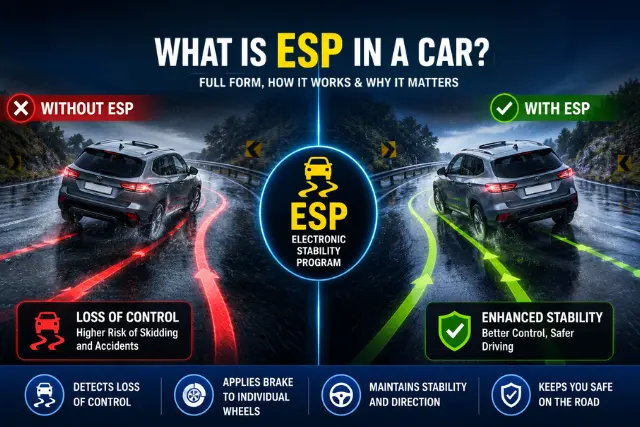
Read MoreWhat is ESP in a Car? Full Form, How it Works & Why it Matters

23 days ago
Quick Answer: What is ESP in a car? ESP stands for Electronic Stability Program(also Electronic Stability Control / ESC). It is an active safety system which will automatically sense when your car begins to skid or lose its grip and will brake the wheels it deems to be moving too fast individually to correct the car. It relies upon and works with your ABS and TCS systems. Picture this: you're driving on a rain-soaked road, you steer to avoid something, and the back of the car starts sliding out. In a car without safety tech, that's where accidents happen. In a car with ESP, that sliding movement is detected and corrected in milliseconds — before you've even had a chance to react. What is ESP in a car? It's one of the most important active safety features ever developed, and understanding how it works makes you a smarter, safer driver — and a more informed car buyer. What is ESP in a Car? - The Simple Explanation ESP stands for Electronic Stability Program. It's also very commonly known as Electronic Stability Control or ESC, since most manufacturers refer to the system as the ESC but use different names. ESP (also known as ESC) stands for Electronic Stability Programme, and it's one of the most important safety features on your car. The electronic stability program (ESP) supports the driver in nearly all critical driving situations. It comprises the functions of the anti-lock braking system (ABS) and the traction control system, but can do considerably more. It detects vehicle skidding movements, and actively counteracts them. To put it in simple terms: ESP is an invisible 'buddy' to your car. It "looks" at whatever the car is doing at every tiny instant of time and compares that against whatever you're attempting to do at the wheel, and makes up the difference where it's risky, and does it automatically at speeds nobody can compete with. ESP Full Form in Car — And What Different Brands Call It The ESP full form in cars is Electronic Stability Program. However, different car manufacturers have trademarked their own names for the same technology: td {border: 1px solid #cccccc;}br {mso-data-placement:same-cell;} Brand Name Manufacturer What It Stands For ESP Mercedes-Benz, Bosch, VW, Hyundai, Kia Electronic Stability Program ESC Toyota, Honda, Chevrolet, Ford Electronic Stability Control DSC BMW, Jaguar, Land Rover Dynamic Stability Control VSC Toyota (older models) Vehicle Stability Control PSM Porsche Porsche Stability Management VDC Nissan, Subaru Vehicle Dynamic Control Different labels, same purpose — to help keep your vehicle stable and under control. So when someone says their car has ESP, ESC, or DSC — they mean the same fundamental electronic stability program. The ESP full form in cars may vary by manufacturer, but the function is identical. How Does ESP Work in a Car? This is where it gets interesting. The ESP control unit compares the actual movement of the vehicle with the desired direction of travel hundreds of times per second. Here's how the full ESP system operates step by step: Step 1 - Sensors Read Everything in Real Time ESP system functions using the data inputs from many sensors, which are continually supplying information to the control unit: Wheel speed sensors-measures the rotational speed of each individual wheel Steering angle sensor-measures the direction the driver is turning the steering wheel in intended direction Yaw rate sensors-measure the angular rate of the car about its vertical axis ( are you spinning?) Lateral acceleration sensor-measures the sideward acceleration( is the car sliding sideways?) A yaw sensor located in the centre of the car detects side-to-side motion of the car. This helps the computer know which wheels have more grip and transfer more or less power or brake pressure to a wheel to have maximum traction at all times. Step 2 — The ECU Detects a Problem ESP system operates by receiving input from sensors, which can detect a vehicle's speed, the angle of its steering wheel and its yaw rate. If the system registers a vehicle is skidding by oversteering or understeering it then applies a brake to one of its wheels to regain the stability and avoid skidding. Step 3 — ESP Intervenes Automatically If the ESP system senses a skid or wheel slide, it reacts in two ways: It uses the brakes on individual wheels rather than applying all four. Reduces engine power — in some cases, the ESP system may also reduce engine power if excessive acceleration is detected, which can help prevent further loss of control This whole process happens in milliseconds — typically faster than the human eye can blink. ESP, ABS, and TCS - What's the Difference? A lot of people confuse these three systems. They're related but each does a different job: td {border: 1px solid #cccccc;}br {mso-data-placement:same-cell;} System Full Form What It Does When It Activates ABS Anti-lock Braking System Prevents wheels from locking during hard braking When braking hard or on wet roads TCS Traction Control System (TCS) Prevents wheel spin during acceleration When accelerating on slippery surfaces ESP Electronic Stability Program Prevents skidding and loss of directional control During cornering, emergency manoeuvres, slippery roads EBD Electronic Brakeforce Distribution Balances brake force front and rear Every braking event BA Brake Assist Adds extra braking in emergencies During panic stops ESP is a platform where all sub-systems come together: ABS prevents the wheels from locking up when the driver brakes heavily; TCS/ASR stops the wheels spinning during acceleration, and EBD regulates brake distribution across the axles. With Brake Assist, the brakes are activated with more force in case of emergency stops. Consider the following: ABS brakes for you during braking, TCS accelerates for you during acceleration, and ESP works for you when cornering or swerving – the time when most major accidents occur. What Does the ESP Warning Light Mean in a Car? The ESP warning light on your dashboard looks like a car with two skid marks underneath, sometimes with the letters "ESP" or "ESC" next to it. There are two different scenarios: 1. ESP Warning Light Flashing (Briefly) This is completely normal and good. A briefly flashing ESP warning light means the system just activated and saved you from a skid. It's doing exactly what it's supposed to do. 2. ESP Warning Light Stays On Permanently If the ESP warning light stays on continuously after starting the car, that means there's a fault in the ESP system. Common causes include: Faulty wheel speed sensors Steering angle sensor fault Low battery voltage affecting the control unit Recent wheel alignment change not calibrated to the system Damaged yaw rate sensors A permanent ESP warning light means your stability system is disabled. The car will still drive, but you've lost this safety net — get it checked. Quick fix to try first: Sometimes the ESP warning light comes on after a tyre change or battery replacement. Driving in a straight line for a minute or two, or doing a slow figure-eight, can recalibrate the steering angle sensor and clear the warning. What Does the ESP Button in a Car Do? Most cars with ESP have a dedicated ESP button — usually marked with the skid symbol or the letters ESP/ESC. Pressing the ESP button doesn't break anything — it simply switches off the electronic stability program temporarily. When should you turn ESP off? When you're stuck in mud or snow and need to rock the car free — ESP can cut power too aggressively in these situations On a track day — where a controlled drift is intentional Some off-road situations where wheel spin is needed for momentum When should you keep ESP on? All normal road driving — always Wet, icy, or slippery roads — always On highways at high speeds — always With passengers in the car — always In most modern cars, if you switch ESP off, it automatically switches itself back on when you exceed a certain speed — usually around 50 km/h. ESP in Indian Cars — Which Cars Have It? ESP has been increasingly common in Indian cars, especially post the new NCAP safety regulations. Here's a quick look at popular Indian models with ESP: td {border: 1px solid #cccccc;}br {mso-data-placement:same-cell;} Car ESP Available Variants Hyundai Creta Yes Mid and top variants Kia Seltos Yes HTX and above Tata Nexon Yes All variants (post-facelift) Maruti Brezza Yes Select variants Hyundai i20 Yes Top variants Tata Harrier Yes All variants Toyota Fortuner Yes All variants MG Hector Yes All variants Mahindra Scorpio-N Yes Z8 and above Honda City Yes V and above Cars in India with TCS and ESP together are increasingly the norm in the ₹10 lakh+ segment. For budget cars below ₹7–8 lakh, ESP may still be optional or absent — always check the specific variant before buying. What is EBD and ESP in Cars? A common question — what is EBD and ESP in cars? ESP (Electronic Stability Program) - stopping you from skidding and losing directional control in a corner or when performing an emergency maneuver. EBD (Electronic Brakeforce Distribution) - This operates on every brake application in order to control optimum application of brake forces to front and rear wheels dependent on conditions and load. Both are related as they are both in a similar safety ecosystem, but the EBD operates on every brake application whereas the ESP is a reactive system and is only in operation when instability is detected. Is ESP Necessary in a Car? (Honest Answer) Yes — and the numbers back it up. Studies by the European Road Safety Observatory found that ESP reduces fatal single-vehicle accidents by approximately 49% for cars and 67% for SUVs. Several governments now mandate electronic stability control as standard on all new vehicles. ESP or ESC is designed to prevent skidding or loss of traction when performing an emergency stop or driving in wet or slippery road conditions. The system works via wheel speed sensors, steering angle sensors, and yaw rate sensors, to monitor the vehicle's speed, direction, and the driver's steering input. If you're buying a car — new or used — ESP should be on your must-have list. It's not a luxury feature; it's a genuine life-saver. Quick Summary: ESP in a Car — Key Takeaways ESP full form: Electronic Stability Program (also ESC, DSC, VSC — same thing) What it does: Detects skids and loss of control — applies the brakes on individual wheels + reduces engine power to correct Sensors used: Yaw rate sensors, wheel speed sensors, steering angle sensor Works with: Anti-lock braking system, traction control system TCS, EBD, Brake Assist Warning light flashing: System activated — good, working correctly Warning light ON permanently: System fault — get it checked ESP button: Turns system off temporarily — only for specific off-road or track use Is it necessary? Yes — it's one of the most life-saving technologies in modern cars Want to check whether a specific car model comes with ESP and other safety features before buying? Compare Full Car Safety Specs on VahanKhoj - India's most complete car research platform — compare safety features, variants, and specs of every car sold in India. Frequently Asked Questions (FAQs) What is ESP in a car in simple terms? ESP (Electronic Stability Program) is a safety system that automatically detects when your car is about to skid or lose control, then applies the brake on specific wheels and/or reduces engine power to bring the car back on its intended path — all in milliseconds, without any input from the driver. What is the ESP full form in a car? The full form of ESP in cars is Electronic Stability Program. The system can be known as Electronic Stability Control (ESC), Dynamic Stability Control (DSC) or Vehicle Stability Control (VSC) by different car manufacturers-all relate to the electronic stability programme technology. How does a car's ESP work? The car's movement data is constantly compared against what is desired. Electronic control units analyze information from yaw sensors, speed sensors and steering angle sensors in order to determine if the car's actual movement deviates from its intended course. If a deviation occurs, individual wheels are braked, and engine power can be reduced to eliminate the skid. What does the ESP button on a car do? The ESP button on a car switches off the electronic stability program temporarily, for use off road or on a track in a situation when wheel spin is desired. In normal road driving, the ESP button should always remain ON. What is the difference between ABS and ESP? ABS is applied to the brakes to stop the wheels locking up, and ESP goes one step further in that it detects loss of stability while cornering, swerving or driving on slippery surfaces and helps to eliminate it working in conjunction with the ABS and ESP (TCS) as an integrated unit. Which Indian cars have ESP? Cars with ESP in India include the Hyundai Creta, Kia Seltos, Tata Nexon, Tata Harrier, MG Hector, Maruti Brezza (select variants), Honda City (V trim and above), and Toyota Fortuner. ESP in Indian cars is becoming standard in the ₹10 lakh+ segment as NCAP safety ratings gain importance. What does ESP off mean in a car? ESP off has the ESP system been switched off using the ESP button, car still drives, but ESP stability is turned off. On most new cars, above a certain speed, ESP re-activates automatically. What happens if the ESP warning light stays on? A permanently illuminated ESP warning light indicates a fault in the system — typically a sensor issue. The car remains drivable, but the electronic stability program is inactive. Visit a workshop to diagnose the fault. Written by the VahanKhoj Team — India's trusted car research platform vahankhoj.com | Your one-stop guide for everything car-related in India Reviewed by: Automotive Research Team, VahanKhoj Reviewed by the Vehicle Safety Research Team at VahanKhoj to ensure the information related to ESP (Electronic Stability Program), vehicle safety systems, and automotive technology is accurate, up-to-date, and relevant for Indian car buyers. Last Reviewed: June 2026
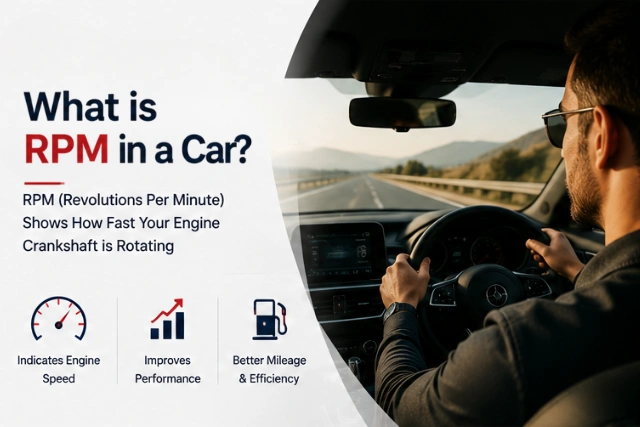
Read MoreWhat is RPM in a Car? Full Form, Meaning, and Everything Explained

about 1 month ago
Quick Answer: RPM stands for Revolutions per minute. It is the number of times a car's engine crank shaft turns a full circle in a minute. The engine speed display on the dashboard of your car shows the reading, called a Tachometer. The typical normal idle RPM in a car ranges from 600-1000, and for regular driving the typical RPM is from 1500-3000. RPM stands for Revolutions Per Minute in cars. This refers to the rate at which the car’s engine crankshaft turns, i.e. How many revolutions are made in a minute. It is basically a unit of speed of your car’s engine. We can see the RPM gauge in our cars moving up when we increase the speed, and moving down as we reduce it. If you’ve been paying attention, you would have surely observed this. However, learning what is RPM in a car becomes very important because it plays a crucial role in the performance of a car. It helps the car to get optimum fuel efficiency, it tells the driver when to change the gears and also affects the driving experience and performance. The proper RPM in an Indian car can lead to increased mileage, reduce wear and tear of the engine, make it much easier to drive in traffic, and also at higher speeds. Whether it is because you are learning to drive or you simply want to know what makes your engine sound so loud when you overtake, we have explained all the terms you require in this detailed guide! What Is the Full Form of RPM in a Car? It stands for 'Revolutions per minute'. The definition of this specific abbreviation means 'the speed at which an engine's crankshaft rotates one complete rotation each minute'. As you can imagine, the crankshaft is the one internal rotating component inside your engine which actually converts the up-and-down motion of your pistons into rotational motion which spins your wheels around. Thus if your tachometer is showing 2, it actually means 2000 revolutions per minute and your crankshaft is spinning 2000 times a minute; a 5000 display on the dial means it's spinning 5000 times a minute. Thus the full form of RPM in a car is effectively telling you just that. So simply speaking when you press down on your accelerator, accelerate to overtake another vehicle on the road or when climbing a steep incline and your engine 'sounds like it's working harder' what actually happens is that your engine's crankshaft has increased speed-it's similar to when you jog and your heart-rate increases; your engine is your car's heart! What Is the RPM Meter in a Car? The RPM meter in a car is officially called a tachometer. It's the gauge on your instrument cluster that displays engine RPM , usually positioned right next to the speedometer. Here's how to read it: The tachometer dial shows numbers 1 through 8 (sometimes up to 9 or 10) Each number represents 1,000 RPM — so "3" = 3,000 RPM The red zone at the far end is called the red line — the maximum safe RPM for your engine Going past the red line risks serious engine damage What does the tachometer look like in action? Tachometer Reading Actual RPM What You're Doing 0.7 – 1.0 700 – 1,000 Car is idling at a traffic light 1.5 – 2.5 1,500 – 2,500 Smooth city driving 2.5 – 3.5 2,500 – 3,500 Moderate acceleration 3.5 – 5.0 3,500 – 5,000 Hard acceleration, overtaking 5.0 – 7.0 5,000 – 7,000 Aggressive driving (petrol cars) Red Zone Beyond 6,000–8,000 Danger zone — avoid What is a Normal RPM Range in a Car? This is one of the most practical things to know as a driver. The idle rotation ranges between 600 RPM and 1,000 RPM, while the normal RPM range for cars on highways is generally between 1,500 RPM and 2,000 RPM. Here's a full breakdown: Normal RPM at Idle The typical idle RPM range for most petrol-powered cars is between 600 and 1,000 revolutions per minute when the engine is warm and in park or neutral. Cold start (just turned on): 1,000–1,500 RPM — this is normal. The engine needs to warm up. Warm idle (engine fully warmed): 700–900 RPM — the sweet spot for most Indian cars Normal RPM While Driving Even though car and truck engines are different from one manufacturer to another, they all typically have the same normal operating range of RPM, which is 1,500–3,000 RPM under normal driving conditions. RPM Ranges by Driving Situation Driving Situation Recommended RPM Notes Idle (stationary) 600–1,000 RPM Normal warm idle City driving 1,500–2,500 RPM Smooth, efficient Highway cruising 1,500–2,000 RPM Fuel-efficient sweet spot Overtaking / acceleration 3,000–5,000 RPM Short bursts are fine Redline (danger zone) 6,000–8,000+ RPM Avoid sustained driving here What is RPM in a Car Engine – How Does It Work? Let's understand what's happening physically inside the engine when engine RPM changes. Your car engine runs on a cycle: intake, compression, combustion, exhaust — repeated thousands of times per minute in each cylinder. Each time the piston completes this cycle, it pushes down on the crankshaft, making it rotate. When you press the accelerator pedal, the throttle opens wider, more air and fuel enter the cylinder, more combustion happens, and the crankshaft spins faster → RPM increases When you ease off the pedal, less fuel enters, combustion slows, the crankshaft spins slower → RPM decreases In neutral gear or at a red light, the engine idles and keeps itself running at the minimum stable speed — around 750 RPM for most Indian cars The engine speed (RPM) and the actual car speed (km/h shown on the speedometer) are linked through your gearbox. This is why the same car speed can show different RPMs depending on which gear you're in — which brings us to the next important topic. RPM and Gear Shifting - The Connection You Need to Understand This is where RPM becomes really practical for everyday driving, especially in a manual transmission car. In a Manual Transmission Car In a manual transmission, you control gear changes yourself. RPM is your primary guide for when to shift gears: Shift up when RPM reaches around 2,500–3,000 RPM → keeps engine efficient Shift down before RPM drops below 1,500 RPM → prevents engine lugging Never let RPM climb into the red line for sustained periods → engine damage risk Why does this matter? Because changing the gear early on rather than waiting for the roaring engine sound leads to better fuel economy. Similarly, changing to lower gears quickly while reducing vehicle speed achieves better fuel efficiency. In an Automatic Transmission Car In a car with an automatic transmission, the gearbox selects all gears on its own through use of the car's various sensors. It is constantly using the readings of how fast the car is moving and how much engine RPM is producing to know when it's time to shift. With an automatic transmission the car will shift from lower gears to higher gears as you continue to accelerate aggressively. If you are easy on the accelerator pedal, then the automatic car will continue to run in lower gears. This is to achieve best performance from the car as well as gain better fuel economy. Even in a car with an automatic, by monitoring the tachometer you can learn when the car is running efficiently and when you are "overworking" the engine. Transmission Type Who Controls Gear Shift RPM Role Manual Transmission Driver (using clutch + gear lever) Driver uses RPM to decide when to shift Automatic Transmission Car's ECU shifts automatically ECU reads RPM + speed to shift AMT (Auto Gear Shift) Automated — no clutch pedal RPM-based automatic shift logic CVT Continuously variable — no fixed gears RPM stays in efficient range automatically What is RPM in a Bike - Is It the Same? Yes , what is RPM in a bike has exactly the same answer. RPM in a bike also stands for Revolutions Per Minute and measures how fast the engine's crankshaft spins. The difference is in the numbers. Bikes typically run at much higher RPM than cars: Most commuter bikes (Hero Splendor, Honda Activa) idle at 1,200–1,500 RPM Sports bikes (KTM Duke, Bajaj Pulsar RS200) can rev to 10,000–12,000 RPM A diesel engine, by comparison, might have a similar idle speed, but will be at the upper limit of its rev-range by about 4,000 RPM — significantly lower than petrol engines What is BHP and RPM in a Car? Understanding the Relationship When you read a car spec sheet, you'll often see something like: "100 BHP @ 6,000 RPM" , and many buyers ignore the second part. Don't. BHP (Brake Horsepower) is the measure of an engine's power output. But here's the key: that power is only available at a specific RPM range. "100 BHP @ 6,000 RPM" means the engine produces its maximum 100 BHP when spinning at 6,000 RPM At lower RPM, the engine produces less than its rated power You need to rev the engine to that RPM band to unlock the full performance BHP vs RPM - What the Numbers Mean: Spec Sheet Reads What It Means 100 BHP @ 6,000 RPM Max power of 100 BHP is available only at 6,000 RPM Peak power at high RPM Sporty, responsive engine (typical petrol) Peak power at low RPM Torquey, pulling engine (typical diesel) What is RPM and Torque in a Car? RPM and torque are the two pillars of engine performance, and they behave differently: Torque is the pulling/twisting force the engine produces — it's what helps you pull heavy loads, climb hills, and accelerate from standstill RPM is the speed at which the engine is spinning — higher RPM typically means higher power output The relationship: Power (BHP) = (Torque × RPM) ÷ 5,252 This formula explains why diesel engines (which produce high torque at low RPM) feel effortless in city traffic and on highways — they don't need high engine RPM to pull strongly. Petrol engines build power at higher RPM and feel more spirited when revved up. Engine Type Peak Torque RPM Peak Power RPM Character Petrol (naturally aspirated) 4,000–5,500 RPM 5,500–7,000 RPM Revvy, sporty Diesel engine 1,500–2,500 RPM 3,000–4,000 RPM Torquey, relaxed Petrol Turbo 1,800–3,500 RPM 4,500–6,000 RPM Best of both Electric Motor 0–1 RPM (instant) N/A Instant torque What Happens When RPM is Too High or Too Low? When RPM Is Too High (For Too Long) Increased fuel consumption - engine burns more fuel at high RPM More engine wear - components experience greater stress at high engine speed Overheating - risk increases significantly If you cross the red line, you risk catastrophic engine damage — broken pistons, blown gaskets, damaged valves Rev limiters in modern cars are designed to electronically cut fuel injection before you can damage the engine — this is why you hear a stuttering sound when you hit the RPM ceiling What are rev limiters? Rev limiters are safety mechanisms built into modern ECUs that prevent the engine from spinning beyond its maximum safe RPM. They automatically cut fuel to protect the engine. When RPM Is Too Low (Engine Lugging) Engine struggles and feels sluggish Vibration and shuddering — especially in manual transmission cars Increased risk of engine stalling Poor acceleration response Long-term engine stress from running below the optimal combustion range What Causes Abnormal RPM Fluctuation? If your engine RPM is jumping up and down on its own — especially at idle — here are the common causes: Symptom Possible Cause RPM fluctuates at idle Dirty throttle body, faulty IAC valve, vacuum leak High idle RPM (above 1,200 warm) Coolant temperature sensor fault, sticking throttle Low RPM / frequent stalling Fuel delivery issue, clogged injectors, weak spark RPM drops when AC is on Weak idle control — needs tuning RPM increases without pressing accelerator Faulty IACV, vacuum leak, throttle cable issue What is RPM Fluctuation, and How to Fix it? RPM fluctuation is a condition when the RPM of your vehicle goes up and down frequently for no apparent reason. This problem may occur due to the following reasons. Bad Spark Plugs: Spark plugs fail as they wear over time and struggle to ignite the air fuel mixture. Hence RPM will fluctuate up and down a lot to accommodate it. Vacuum Leakage: When the vacuum line gets faulty it causes vacuum to drop at the engine and affects engine performance leading to fluctuating RPM. Carburettor Problems: A dirty and blocked carburettor may supply less fuel to the engine, hence leading to fluctuating engine performance. Faulty throttle pedal sensor: problems in throttle pedal sensor will cause the RPM to fluctuate up and down when you try to accelerate the car. Faulty Fuel Injectors: clogged or dirty fuel injectors can cause jumpy acceleration, due to which you might find it difficult to maintain the speed of your car and hence the engine RPM is affected. Transmission fluid leakage: if there is a leak in the transmission fluid, the band in the gearbox becomes slippery. Because the car finds it hard to achieve higher speed, the engine speeds up the RPMs to make it possible. Blocked air filter: An uneven and erratic engine performance can occur if the air filter becomes blocked. If the air supply to the vehicle engine becomes insufficient the vehicle RPM will drop or rise unexpectedly. Faulty idle air control valve: If the idle air control valve has a defect in it then the RPM will rise and fall at regular intervals, even without acceleration. The causes of most of these problems listed above are not overly complicated and should be fixed with a modest budget. If neglected, RPM fluctuation can develop into serious vehicle complications. Below are the steps that you need to undertake to resolve the issue of engine RPM fluctuation. Step 1: Check that your engine has been correctly tuned. Step 2: check for any leaks in the air intake system. Step 3: Make sure your throttle body is not blocked or dirty. Step 4: Clean or replace any fouled or damaged spark plugs. Step 5: Make sure there are no leaks in your engine vacuum line. Step 6: replace the clogged/dirty fuel filter. Step 7: pour in a fuel stabiliser to your fuel tank if you intend on parking your car for an extended period as it will protect your car's fuel system against corrosion and clogging. Step 8: Check your ignition system to make sure that it works fine. Step 9: Get the engine checked for low compression as well. You can conduct an initial inspection independently if you have enough knowledge of the parts. However, taking the vehicle to a qualified professional for a thorough and accurate diagnosis is always better. RPM and Fuel Economy - How Driving at the Right RPM Saves Money This is something most Indian drivers don't pay enough attention to — but it directly affects how much you spend at the petrol pump. RPM is critical for managing an engine's performance, fuel economy, and the transmission's health. Here's the practical truth: Lower RPM = better fuel economy - the engine is working less hard Staying between 1,500–2,500 RPM on city roads is the most fuel-efficient range for most Indian cars On highways, most modern cars cruise efficiently at 1,500–2,000 RPM in the highest gear High RPM driving increases fuel consumption dramatically — a car at 5,000 RPM burns significantly more fuel than the same car at 2,000 RPM doing the same job Practical fuel-saving RPM tips: Shift to a higher gear earlier in a manual car — don't wait for high RPM to shift up On highways, engage the highest gear as early as road speed allows Avoid aggressive acceleration — gradual throttle keeps RPM in the efficient band In city traffic, shift down early enough to avoid lugging the engine below 1,200 RPM Don't rev the engine unnecessarily at red lights or while warming up — modern fuel-injected engines don't need it RPM Full Form in Different Contexts (Car, Bike, Motor, Fan, Computer) Since RPM is used across many fields, here's a quick reference: Context RPM Full Form Meaning RPM full form in car Revolutions Per Minute How fast the engine crankshaft spins RPM full form in bike Revolutions Per Minute Same — engine crankshaft speed RPM full form in motor Revolutions Per Minute Speed of an electric motor's rotor RPM full form in fan Revolutions Per Minute How many times the fan blade rotates/min RPM full form in computer Revolutions Per Minute Speed of a hard disk or CPU cooling fan RPM full form in machine Revolutions Per Minute Speed of any rotating machinery component The concept is identical across all these applications — it always measures rotational speed in terms of complete rotations per minute. Ideal RPM for Car - Quick Reference by Car Type Car Type Idle RPM City Driving Highway Redline Petrol Hatchback (Swift, i20) 700–900 1,500–2,500 2,000–2,500 6,500–7,000 Petrol Sedan (City, Verna) 700–900 1,500–2,500 1,800–2,200 6,000–7,000 Diesel SUV (Creta, Seltos) 750 RPM 1,200–2,000 1,500–2,000 4,000–4,500 Petrol SUV (Brezza, XUV300) 700–850 1,500–2,500 1,800–2,200 6,000–6,500 Turbopetrol (Nexon Turbo) 750–900 1,500–2,500 1,800–2,200 5,500–6,500 Sports Car / Performance 800–1,000 2,000–4,000 2,500–4,000 7,000–9,000+ The Bottom Line: Why RPM Actually Matters for You Understanding what is RPM in a car isn't just trivia — it's practical knowledge that makes you a better, more economical driver. Watch your RPM meter to know when to shift gears in a manual car Keep engine RPM between 1,500–2,500 for the best blend of performance and fuel economy Never sustain RPM in the red line — rev limiters protect you, but pushing them repeatedly causes wear If your engine RPM is fluctuating without reason, get it checked before it becomes a bigger problem Every time that needle moves on your tachometer, your engine is talking to you. Now you can actually listen. Want to check the RPM specs, BHP, and torque of any car before buying? Explore Full Car Specifications on VahanKhoj . Compare engine specs, RPM ratings, fuel efficiency, and complete features of every car sold in India - in one place. Frequently Asked Questions About RPM in a Car What is the full form of RPM in a car? The full form of RPM in a car is Revolutions Per Minute. It measures how many times the engine crankshaft completes one full rotation every minute and is displayed on the tachometer on your dashboard. What is a good RPM for a car while driving? For most Indian cars, the ideal RPM while driving is between 1,500 and 2,500 RPM in city traffic and 1,500–2,000 RPM on highways. Keeping your engine RPM in this range balances performance, fuel economy, and engine health. What is the meaning of RPM in a car at idle? At idle (engine running, car not moving), a normal car should sit between 600–1,000 RPM. A cold engine may briefly idle at 1,000–1,500 RPM for a few minutes while warming up — this is completely normal. What is RPM and how does it affect fuel consumption? RPM directly affects fuel consumption. Higher RPM means the engine is burning more fuel per minute. Driving at lower, efficient RPM ranges (1,500–2,500 in city) and shifting to higher gears earlier in manual cars are the two most effective ways to improve fuel economy. What is BHP and RPM in cars? BHP (Brake Horsepower) is the maximum power output of an engine. RPM is the engine speed at which that peak power is produced. A spec reading of "100 BHP @ 6,000 RPM" means the engine makes 100 BHP only when spinning at 6,000 RPM. Higher RPM at peak power = more sporty character. What is RPM and torque in a car? Torque is the pulling force the engine generates; RPM is how fast it's spinning. Together they determine power output: Power = (Torque × RPM) ÷ 5,252. Diesel engines produce peak torque at low RPM (1,500–2,500), making them efficient and strong for daily use. Petrol engines build power at higher RPM. What are rev limiters in a car? Rev limiters are electronic safety systems built into the ECU that cut fuel injection before the engine exceeds its maximum safe RPM. They prevent engine damage when RPM climbs into the red line zone. You'll experience them as a stuttering or bouncing sensation when you hit the RPM ceiling. Why does my car's RPM fluctuate at idle? RPM fluctuating at idle usually points to a dirty throttle body, faulty idle air control (IAC) valve, vacuum leak, or fuel delivery issue. If your engine RPM is bouncing up and down at idle, get it checked by a mechanic — it typically doesn't resolve on its own. What is the difference between RPM in petrol and diesel engines? Petrol engines produce peak power at high RPM (5,500–7,000) and feel more exciting when revved. Diesel engines produce peak torque at much lower RPM (1,500–2,500 RPM), making them quieter, more fuel-efficient, and better for long-distance highway driving without high engine stress. What is the 'red line' on a tachometer? The red line indicates the maximum safe RPM limit for an engine. Exceeding this limit can cause severe engine damage. Modern vehicles often have rev limiters to prevent surpassing this threshold. Written by the VahanKhoj Team - India's trusted car research platform vahankhoj.com | Your one-stop guide for everything car-related in India. Reviewed by Automotive Research Team This article was reviewed using vehicle manufacturer resources, owner manuals, automotive engineering references, and publicly available information related to RPM, engine performance, fuel efficiency, and transmission systems.
Read More
FAQs
How We Can Help?
faqs not found!