Search by brand

Login
To More Inquiry
Maruti Unveils India's First Flex-Fuel Wagon R, Supports Ethanol Blends from E20 to E85
Updated at :
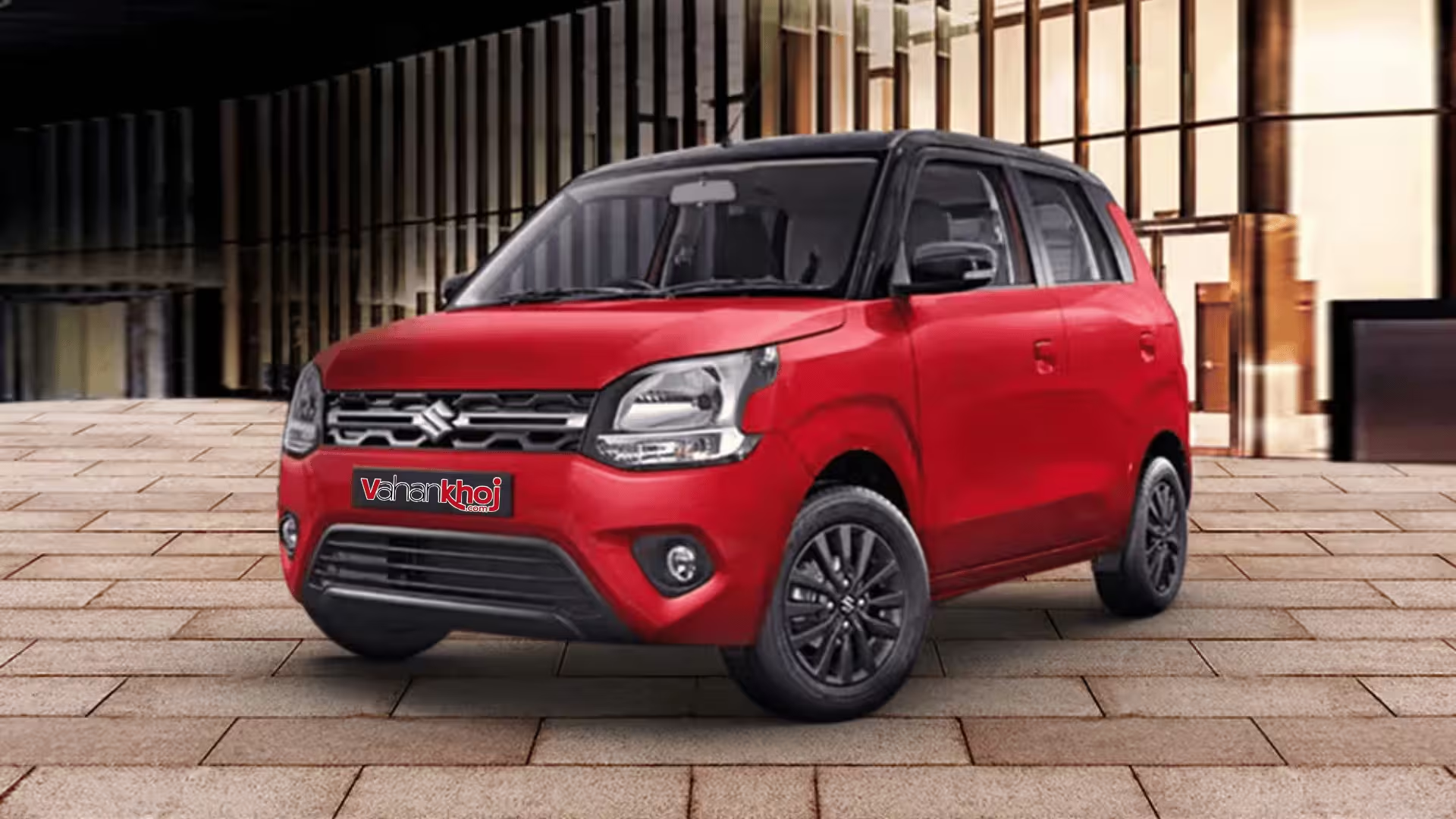
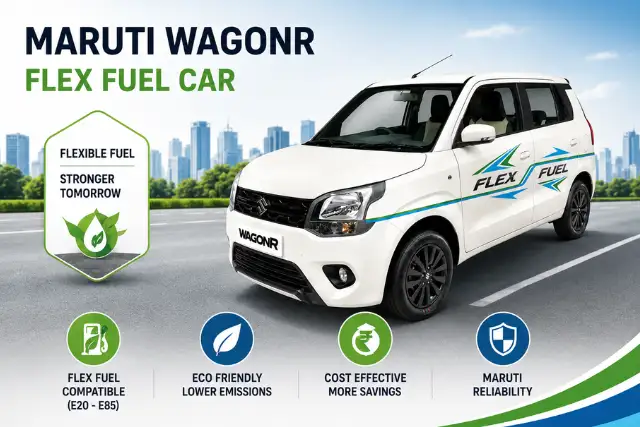
India has taken another major step toward cleaner and more sustainable transportation with the launch of the Maruti Suzuki Wagon R Flex Fuel, the country's first passenger car capable of running on ethanol-petrol blends ranging from E20 to E100.
The vehicle was unveiled in the presence of Union Road Transport and Highways Minister Nitin Gadkari, Petroleum and Natural Gas Minister Hardeep Singh Puri, and Hisashi Takeuchi.
Maruti Suzuki Wagon R Flex Fuel- the first passenger flex fuel car from India runs on different variants of ethanol-petrol mixes from E20 to up to E85 and targets to reduce dependency on petrol, lower emissions, and expand the ethanol fuel segment in India, which is growing at a rapid pace.
To introduce this technology to the masses, Maruti Suzuki has selected India's most reliable hatchback- the Wagon R. And the output is an utterly functional family car that can run on variable ethanol-petrol mixes without demanding any manual intervention on the driver's part.
Regardless of whether you are a current Wagon R owner, a car enthusiast, or just curious to learn about the future of fuel in India, here's everything you should learn to know.
What Is Maruti Suzuki Wagon R Flex Fuel?
Basically, the Wagon R Flex Fuel is just a modification/tuned-up version of the Wagon R hatchback. Where a petrol-powered car would run only on a petrol blend, the flex-fuel variant can run on various blends of ethanol-petrol.
The basic idea behind a FFV is that it recognises the blend ratio by itself and applies the changes required by its engine automatically. You will not need to bother whether the fuel blend consists of more petrol or more ethanol.
Here are a few typical fuel blends that this flex-fuel car would be able to run on:
- E20 (20% Ethanol + 80% Petrol)
- E50 (50% Ethanol + 50% Petrol)
- E85 (85% Ethanol + 15% Petrol)
According to Maruti Suzuki, the Wagon R Flex fuel was developed keeping in mind India’s long-term goals of energy and bio-fuel security.
What Is a Flex-Fuel Vehicle (FFV)?
A Flex-Fuel Vehicle (FFV) is a car that can run on different blends of petrol and ethanol. It automatically detects the fuel mixture and adjusts the engine settings, so drivers don't need to make any manual changes.
This technology allows vehicles like the Maruti Suzuki Wagon R Flex Fuel to use fuel blends ranging from E20 to E85, offering greater fuel flexibility while supporting cleaner and more sustainable mobility solutions.
Why Is the Wagon R Flex Fuel Important?
Wagon R Flex Fuel marks a major evolution that could define India's transportation fuel future:
Less dependence on imported oil
Most crude oil for India is imported, whereas ethanol is produced domestically from renewable agricultural feedstock like sugarcane.
Lower Carbon emissions
Greater amounts of ethanol can contribute to reduced greenhouse emissions over traditional petrol vehicles.
Farmer benefits
The higher amount of ethanol can lead to increased demand and benefit India's agriculture sector.
Forward-thinking technology
As ethanol infrastructure grows,flex-fuel vehicles are poised to become more accessible in day-to-day use.
How Does Wagon R Flex Fuel Work?
The technology behind a flex-fuel vehicle is more advanced than simply filling the tank with ethanol.
To handle higher ethanol concentrations, manufacturers typically upgrade:
- Fuel injectors
- Fuel pumps
- Fuel lines
- Engine management software
- Ethanol sensors
- Engine calibration systems
The vehicle would then be able to run reliably and perform well even with different proportions of ethanol.
Wagon R Flex Fuel Specifications
Though the exact specs haven't been revealed by Maruti Suzuki so far, word is that the car would be based on the familiar Wagon R model. It is expected to be powered by a reworked K-series engine designed to handle fuel blends.
Some of the known features:
Will the Wagon R Flex Fuel Save Money?
A commonly asked question is:
Is Flex Fuel cheaper than petrol?
In all likelihood, yes.
Ethanol is cheaper than petrol, and if it is competitively priced and becomes widely available, then a petrol car will not necessarily be cheaper to run. Your fuel savings will depend on:
- Local prices of fuel
- Availability of ethanol
- Conditions under which you drive
- Car's fuel efficiency
Because ethanol has less energy per litre than petrol, the actual fuel economy may change when driving a car that uses a high proportion of ethanol.
Is Ethanol Cheaper Than Petrol?
In many cases, ethanol is cheaper than petrol, which can help reduce fuel costs. However, the actual savings depend on factors such as local fuel prices, ethanol availability, and your vehicle's fuel efficiency. Since ethanol contains less energy per litre than petrol, mileage may vary when using higher ethanol blends.
Wagon R Flex Fuel vs Regular Wagon R
Is India Ready for Flex-Fuel Cars?
Fueling infrastructure remains a critical challenge. While the government is accelerating progress towards ethanol-powered mobility, ethanol dispensing outlets are not as numerous as conventional petrol pumps, and it is anticipated that this figure will surge in the coming few years.
Higher ethanol blends have to be made readily available to ensure the proliferation of flex fuel vehicles.
Should You Buy the Wagon R Flex Fuel?
The answer depends on your driving needs.
You should consider the Wagon R Flex Fuel if:
- You want a future-ready vehicle
- You support cleaner fuel technologies
- Ethanol fuel becomes available in your area
- You are looking for potentially lower fuel costs
You may want to wait if:
- Ethanol stations are unavailable near you
- You prefer proven long-term infrastructure
- Pricing details are a deciding factor
Check Vehicle Details Before Buying Any Car
Before purchasing any used or new vehicle, always verify:
- RC details
- Vehicle ownership history
- Challan records
- Registration information
VahanKhoj helps you instantly check vehicle information online using the vehicle registration number.
Quick CTA: Check RC details, owner information, and challan records instantly on VahanKhoj before making your next vehicle purchase.
Key Takeaways
- Maruti Suzuki Wagon R Flex Fuel is the first flex-fuel passenger vehicle.
- It runs on any combination of ethanol-petrol blend ranging from E20 to E85.
- Flex-fuel offers a way of reducing reliance on imports.
- Lower emissions and energy security would be an effect of ethanol-fuelled mobility.
- Expansion of infrastructure would be key to its widespread use.
- Wagon R Flex Fuel might be just the beginning of more flex fuel vehicles in the country.
Frequently Asked Questions (FAQs)
What Is the Price of the Maruti Suzuki Wagon R Flex Fuel?
Maruti Suzuki has showcased and launched the Wagon R Flex Fuel as part of its alternative fuel strategy. However, the company has not yet announced a mass-market retail price or nationwide availability schedule. Buyers should watch for official updates from Maruti Suzuki regarding pricing and bookings.
What exactly is a Maruti Suzuki Wagon R Flex Fuel?
This is basically a flex-fuel-powered version of the existing Wagon R, which could be fueled with different blends of ethanol and petrol, not only petrol as it is in the current Wagon R.
Can a Wagon R Flex Fuel be filled up with petrol?
Of course, due to the flexibility feature, it can be filled with any kind of blend. It could be fueled in any mix.
What is E85 fuel?
E85 is actually a mix of ethanol and petrol, which could have a maximum 85% of ethanol while minimum of petrol (15%).
Is Wagon R Flex Fuel launched in India?
The Wagon R Flex Fuel has been launched in India by Maruti Suzuki. It has even become the first flex fuel-powered passenger car in India. But the availability would be dependent on operational phases.
Will a flex fuel car replace a petrol car?
Not at the moment, and they are also expected to operate alongside existing petrol, CNG, hybrid and electric cars as India progresses towards environmentally friendly modes of transportation.
Reviewed by the Automotive Research Team
This article has been reviewed for accuracy using information from official Maruti Suzuki announcements, government statements, and trusted automotive sources. Vehicle specifications, features, and availability may change over time, so readers should verify the latest details through official channels.
Trending Maruti Suzuki Cars