

Search by brand

Login
To More Inquiry
Home | NEW CARS | MARUTI SUZUKI | IGNIS
Maruti Suzuki Ignis
Maruti Suzuki Ignis price starts at ₹5.35 Lakh (ex-showroom). The base model Maruti Suzuki Ignis Sigma is the most affordable, while top-end Maruti Suzuki Ignis Alpha Dual Tone AMT is priced at ₹7.55 Lakh. Automatic variant with AMT transmission easy city driving with fuel-efficient 1197cc petrol engine. Looking for the best deals? Visit your nearest Maruti Suzuki showroom today.
Read MoreDiscontinued
Maruti Suzuki Ignis Price
⭐ 4.716 ReviewsRate and Win ₹1000Automatic petrol variant with convenience features.
Select Variant
- Sigma
- Delta
- Delta AMT
- Delta Dual Tone AMT
- Zeta
- Zeta Dual Tone
- Zeta AMT
- Zeta Dual Tone AMT
- Alpha
- Alpha Dual Tone
- Alpha AMT
- Alpha Dual Tone AMT
📍 Select your city
₹6.29 Lakh
*Ex-Showroom Price in
Maruti Suzuki Ignis All Variants
Automatic variant with AMT transmission easy city driving with fuel-efficient 1197cc petrol engine.
Overview Of Maruti Suzuki Ignis
The Maruti Ignis is discontinued in India. Maruti Suzuki quietly ended production in early 2026, dealers stopped accepting bookings from around 1 April 2026, and the model was formally delisted from the Nexa website on 18 June 2026. A handful of Nexa outlets may still hold final stock, but there will be no fresh production.
That makes this page useful in a different way. If you searched Maruti Ignis price hoping to book one, the honest answer is that your options are now leftover dealer stock or the used market. And the used market is where the Ignis suddenly makes a lot of sense. A nine-year-old nameplate with a proven 1.2-litre engine, 180 mm ground clearance and Maruti-grade running costs is now trading at a discount because of its discontinued badge.
At its exit, the Maruti Suzuki Ignis was priced between ₹5.35 lakh and ₹7.42 lakh ex-showroom across four variants: Sigma, Delta, Zeta and Alpha.
Best for: Used buyers · City driving · Solo and couple owners · Buyers who want something visually different
The Ignis was never a bad car; it was an odd one, and the Indian market eventually chose SUV proportions over quirky crossover styling. What it did well remains true today: it's genuinely light, easy to place in traffic, has a peppy 1.2-litre petrol engine, and offers 180 mm ground clearance that shames most hatchbacks. What sank it was a 1-star Global NCAP rating, a small 260-litre boot, and sales that fell below 2,000 units a month in its final year.
Maruti Ignis Variants Explained
- Ignis Sigma - The base car. Dual airbags, ABS with EBD, manual AC, no touchscreen, no alloys. Fine as a used purchase if you only need transport; poor value at new prices.
- Ignis Delta - The sensible mid-spec. Adds a touchscreen, steering-mounted controls, rear parking sensors and keyless entry. This is the variant most used listings carry.
- Ignis Zeta - Adds automatic climate control, a reverse camera and better trim. The sweet spot on the used market.
- Ignis Alpha - LED projector headlamps, 15-inch alloys, 7-inch SmartPlay Studio touchscreen with navigation, and the dual-tone roof options the Ignis was known for. Best-equipped, and the variant that holds resale best.
Best pick: Ignis Zeta MT
Engine, Performance and Driving Feel
The 1,197 cc K12N Dual Jet petrol is the Ignis's strongest asset. At 82 bhp and 113 Nm in a car weighing under 900 kg, it feels genuinely quick off the line. It is noticeably more eager than a Wagon R or Celerio. The five-speed manual is light and precise.
The AGS (AMT) is the usual Maruti compromise: convenient in traffic, with a distinct pause between shifts. Ease off the accelerator as it changes gear and it settles down.
Where the Ignis surprises is the 180 mm ground clearance combined with a 4.7 m turning radius. Broken roads, unmarked speed breakers and tight parking are all handled with more confidence than the segment norm. High-speed stability is average. The tall, narrow body catches crosswinds. But for city use, it's one of the more enjoyable small cars Maruti has built.
Interior, Features and Colours
Interior: The Ignis interior was one of its more polarising elements, with a chunky, upright dashboard featuring body-coloured inserts on higher variants and a 60:40 split rear seat that was genuinely useful. Material quality was Nexa-adjacent rather than Nexa-grade: hard plastics, but better assembled than the Arena hatchbacks.
Features: The 260-litre boot is the practical weak point. Two cabin bags fit; a family's weekend luggage does not.
Maruti Ignis colours: Nexa Blue, Pearl Arctic White, Silky Silver, Lucent Orange, Glistening Grey and Pearl Midnight Black, with dual-tone black roof options available on the Zeta and Alpha variants. The Ignis was also one of the first mass-market Indian cars to offer factory-level personalisation packs, including roof wraps and coloured interior inserts.
Maruti Ignis Safety Rating
Standard equipment: dual front airbags, ABS with EBD, ISOFIX mounts, rear parking sensors, seatbelt reminders and central locking. Higher variants added a reverse camera.
Global NCAP tested the Ignis in December 2022 under its stricter protocols and awarded it 1 star for adult occupant protection, scoring 16.48 out of 34.
This matters for two reasons. First, it's the single biggest thing to weigh if you're buying one used with a family in mind. Second, it's widely cited as a contributing factor in the discontinuation, because the Ignis's ageing platform was increasingly difficult to align with India's tightening crash norms, and Maruti chose to retire it rather than re-engineer it.
Should You Buy a Used Maruti Ignis in 2026?
There's a real case for it. Discontinuation pushes used prices down faster than mechanical reality justifies, and the Ignis's core hardware, including the K-series petrol engine, the AGS gearbox, and the Heartect-derived platform, is shared across Maruti's range. Parts availability and service access will remain straightforward for years.
Maruti Ignis second hand price currently runs roughly:
| Model Year | Variant | Typical Price |
| 2018 - 2019 | Delta MT | ₹3.8 - 4.5 lakh |
| 2020 - 2021 | Zeta MT | ₹4.8 - 5.6 lakh |
| 2022 - 2023 | Zeta / Alpha | ₹5.5 - 6.5 lakh |
| 2024 - 2025 | Alpha AGS | ₹6.2 - 7.0 lakh |
Buy used if you want a light, nippy city car with high ground clearance and low running costs, and you're driving mostly solo or as a couple.
Avoid it if crash safety is your priority, you regularly carry luggage, or you're worried about resale, as a discontinued badge could put further pressure on resale value over the next three years.
Why Choose VahanKhoj for Maruti Ignis?
VahanKhoj provides updated information on Maruti Ignis price, Maruti Ignis on-road price, Maruti Ignis specifications, Maruti Ignis mileage, Maruti Ignis automatic price, Maruti Ignis interior, Maruti Ignis colours, Maruti Ignis safety features, and EMI & finance options.
Whether you're researching the Maruti Suzuki Ignis, comparing its variants and ownership costs, or looking for information after its discontinuation in India, VahanKhoj helps simplify your car-buying journey with detailed, accurate, and regularly updated information.
Contact Vahankhoj
📞 9821821898
Get in touch for the best buying option from your authorized dealer
Specifications for Maruti Suzuki Ignis

180 mm

260

5 Persons

50

5 Gear

82 BHP

113 Nm

2 Safety
Maruti Suzuki Ignis Top Features
Keyless Entry
×
Engine Start/Stop Button
×
Power Steering
✓
Air Conditioner
×
Airbags
✓
ABS with EBD
✓
Android Auto / Apple CarPlay
×
Rear Parking Camera
×
Cruise Control
×
Automatic Headlamps
×
Automatic Climate Control
×
Child Safety Locks
✓
Voice Commands
×
Front and Rear Parking Sensors
×
360° Camera
×
ADAS Features
×
GPS Navigation
×
Mileage Indicator
×
Gear Position Indicator
×
Alloy Wheels
×
Dual Channel ABS
×
Maruti Suzuki Ignis Specifications View
Maruti Suzuki Ignis
Select Variant
- Sigma
- Delta
- Delta AMT
- Delta Dual Tone AMT
- Zeta
- Zeta Dual Tone
- Zeta AMT
- Zeta Dual Tone AMT
- Alpha
- Alpha Dual Tone
- Alpha AMT
- Alpha Dual Tone AMT
Engine & Transmission
- Engine Type : 1.2L K12M Petrol
- Displacement : 1197 cc
- Number of Cylinders : 4
- Max Power : 82 bhp @ 6000 rpm
- Max Torque : 113 Nm @ 4200 rpm
- Transmission : 5-Speed AMT
- Drivetrain : FWD
Fuel & Performance
- Fuel Type : Petrol
- Fuel Tank Capacity : 32 Liters
- ARAI Mileage : 20.89 kmpl
- Real-World City Mileage : 14-16 kmpl
- Real-World Highway Mileage : 18-20 kmpl
Dimensions
- Length : 3700 mm
- Width : 1690 mm
- Height : 1595 mm
- Wheelbase : 2435 mm
- Ground Clearance : 180 mm
- Boot Space : 260 Liters
- Seating Capacity : 5
Safety
- Airbags : 1 (Driver)
- ABS with EBD : Yes
- Rear Parking Sensors : Yes
- ISOFIX Child Seat Anchors : Yes
Features
- Power Windows : All 4
- Central Locking : Yes
- Touchscreen Display : No
- AC : Manual
- Speakers : 2
- Alloy Wheels : No
🚗 Car Insurance
Compare insurance plans from leading providers and save more on your vehicle insurance with instant quotes and a hassle-free process.
40+
Insurance Partners
91%
Maximum Savings
100%
Paperless Process
E-Insure First
Enter your mobile number
+91
Secure • Trusted • Instant Quotes
Maruti Suzuki Ignis Mileage
Maruti suzuki Ignis mileage ranges between 20.2 to 20.89 kmpl depending on the variant and fuel type.
| Powertrain | ARAI Mileage | User Reported Mileage |
|---|---|---|
Petrol - Automatic (1197) | 20.89 | 18.80 kmpl |
Petrol - Manual (1197) | 20.89 | 18.80 kmpl |
Petrol - Automatic (1197 cc) | 20.2 kmpl | 18.18 kmpl |
Comparison with similar cars
Reviews & Rating
Read reviews to get an insider perspective
No reviews yet
Be the first to share your experience!
Maruti Suzuki Ignis Images
+1
+1View All Images
Vahankhoj
Get Best Car Deals
Compare dealer offers, lowest EMI options, exchange benefits and exclusive discounts in your city
✓ Lowest EMI
✓ Best Offers
✓ Exchange Bonus
✓ Free Test Drive
Trending Maruti Suzuki Cars

CityOn-Road Prices



























You Might Like
Latest News
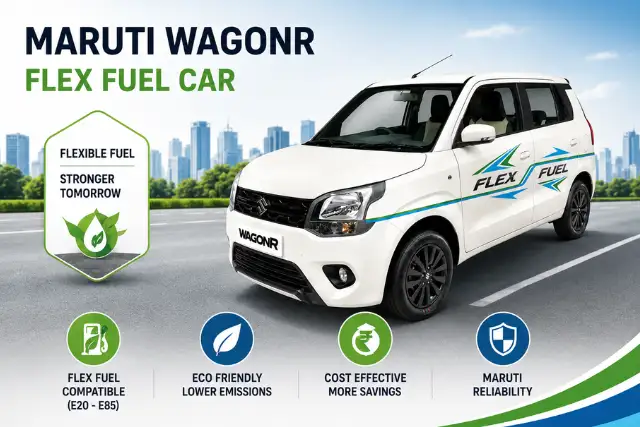
Maruti Unveils India's First Flex-Fuel Wagon R, Supports Ethanol Blends from E20 to E85
4 months ago
Maruti Suzuki has introduced India's first flex-fuel Wagon R, supporting E20 to E85 ethanol-petrol blends for cleaner and more sustainable driving.
Read More
FAQs
How We Can Help?
Yes, Ignis is very good for city driving due to its compact size, high seating position, light steering, and quick maneuverability in traffic.
In real-world conditions, Ignis delivers around 18–21 km/l in city driving and up to 23–25 km/l on highways depending on driving style.
It comes with safety features like dual airbags, ABS with EBD, ISOFIX mounts, and rear parking sensors, but overall safety is average for its segment.
Yes, it can handle highway drives comfortably at moderate speeds, but it is primarily tuned for city usage.
Front seat comfort is good, but rear seat space is limited, so long trips are better suited for small groups or short durations.
No, maintenance is affordable and similar to other Maruti cars with low service costs and easy spare availability.
Yes, it is a good choice in 2026 for buyers who want a stylish, compact, and fuel-efficient city car with a slightly premium feel over entry-level hatchbacks.