BMW Cars

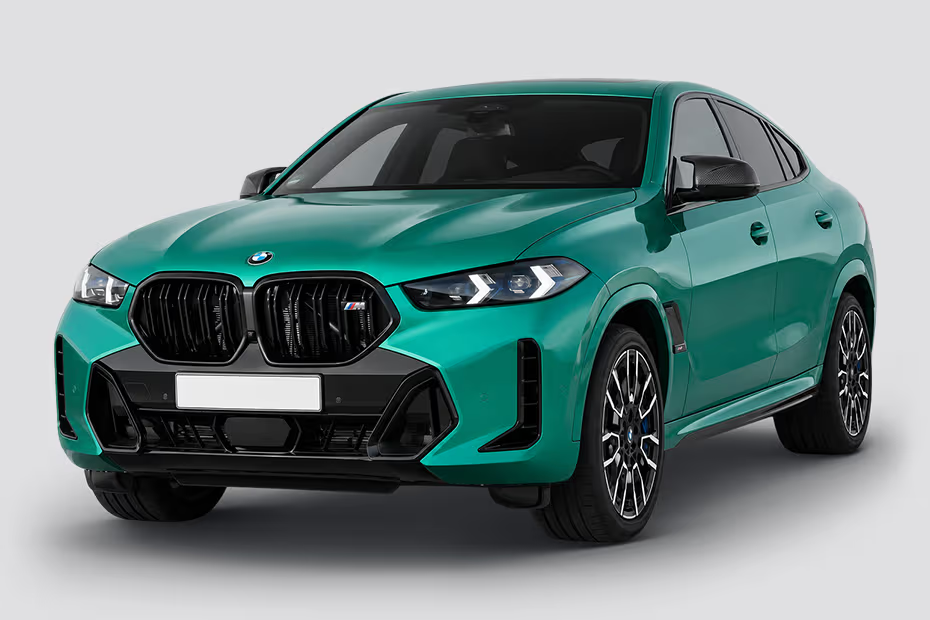
BMW cars in India are known for their sporty performance, premium luxury, and advanced technology. The brand offers a wide range of sedans, SUVs, electric vehicles, and high-performance M models, including the BMW 2 Series Gran Coupé, X1, X5, 7 Series, iX, XM, and M4 Competition.

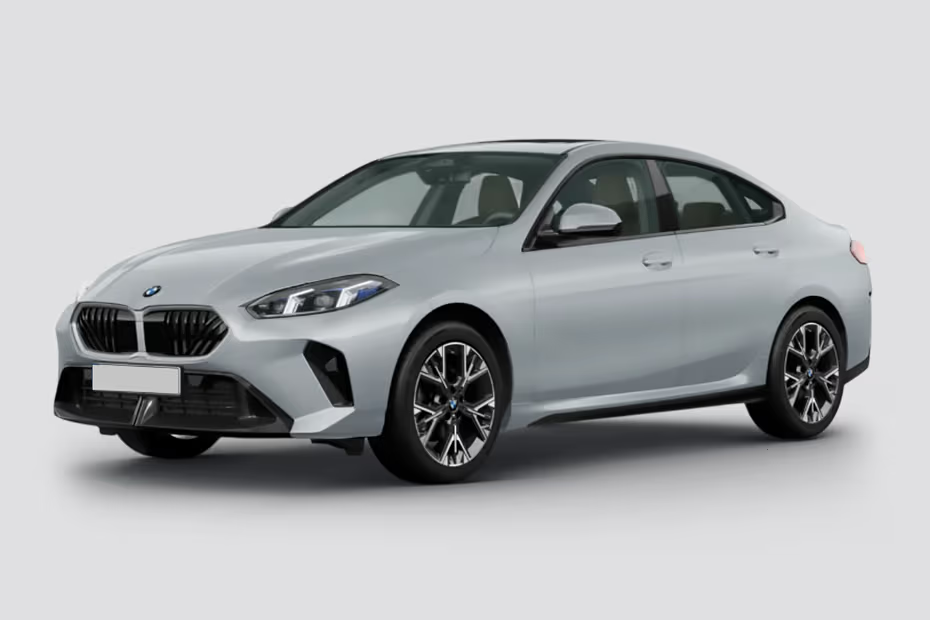
BMW car prices in India start at around ₹44.40 lakh (ex-showroom) for the BMW 2 Series Gran Coupé and go beyond ₹2.60 crore for flagship luxury and performance models. Whether you're looking for the BMW lowest price car in India, a family SUV, a luxury sedan, or the latest BMW electric cars in India, this guide covers the latest BMW models, prices, specifications, features, mileage, and everything you need to know before buying a BMW in 2026.

History of BMW Cars in India

Founded in 1916 in Germany, BMW began as an aircraft engine manufacturer before expanding into motorcycles and luxury automobiles. BMW India started operations in 2007, marking the brand's entry into the country's growing luxury car market.

A major milestone was the opening of BMW's Chennai manufacturing plant, which enabled local assembly and made several models more competitively priced. Today, BMW offers a strong lineup of luxury sedans, SUVs, M performance cars, and electric vehicles, making it one of India's leading premium automobile brands.

BMW Market Share in India

BMW is one of India's leading luxury car brands, competing with Mercedes-Benz and Audi across multiple segments. Its diverse lineup of sedans, SUVs, M performance models, and electric vehicles helps it appeal to a wide range of buyers. With popular models like the X1, X3, 3 Series, 5 Series, and a growing BMW i electric lineup, the brand continues to strengthen its presence in India's premium automotive market.

BMW Car Price in India

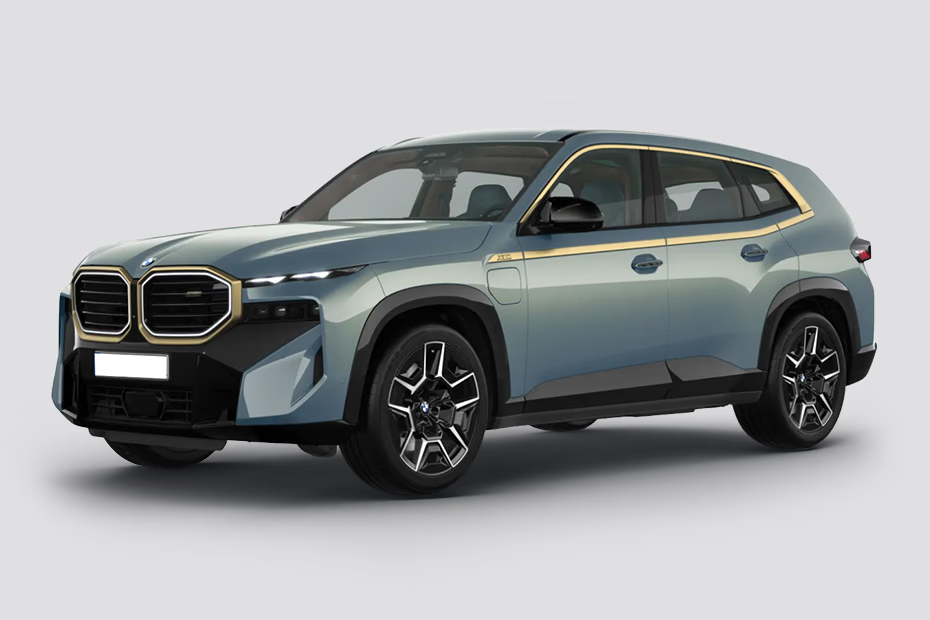
BMW car prices in India start at around ₹44.40 lakh (ex-showroom) for the 2 Series Gran Coupé and go beyond ₹2.60 crore for the BMW XM. The lineup includes luxury sedans, SUVs, M performance cars, convertibles, and electric i models, offering options for first-time luxury buyers, families, and driving enthusiasts alike.

BMW Cars Price Range in India

Let's break down the BMW car price in India properly, because the range is wide and the model names confuse a lot of first-time buyers.

The cheapest way into a new BMW is the 2 Series Gran Coupé at about ₹44.40 lakh. The most expensive is the BMW XM at over ₹2.60 crore. Between those two extremes, the brand sells:

  • Luxury sedans
  • Premium SUVs
  • Coupe SUVs
  • Sports cars
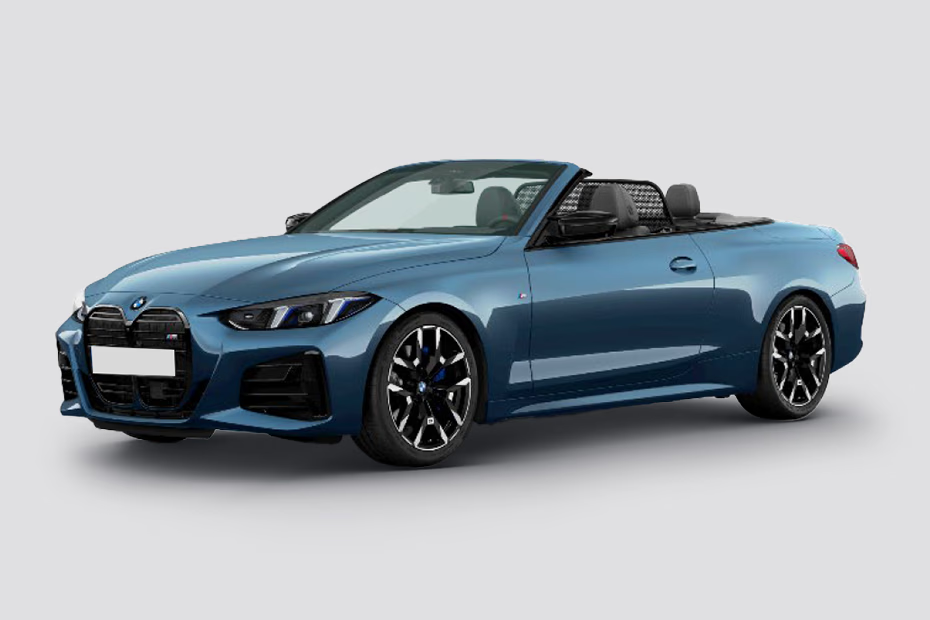
  • Convertibles
  • High-performance BMW M models
  • Fully electric BMW i models

If you want the lowest price BMW car in India, that's the 2 Series Gran Coupé, full stop. Good looking car, proper BMW interior, and a price that undercuts everything else in the showroom.

Family buyers usually end up between the X1, X3 and X5. People who want the full luxury experience go for the 7 Series. And the enthusiasts? They walk straight past everything else to look at the M2, the M4 Competition or the Z4 Roadster. I've seen it happen.

Popular BMW Car Models in India

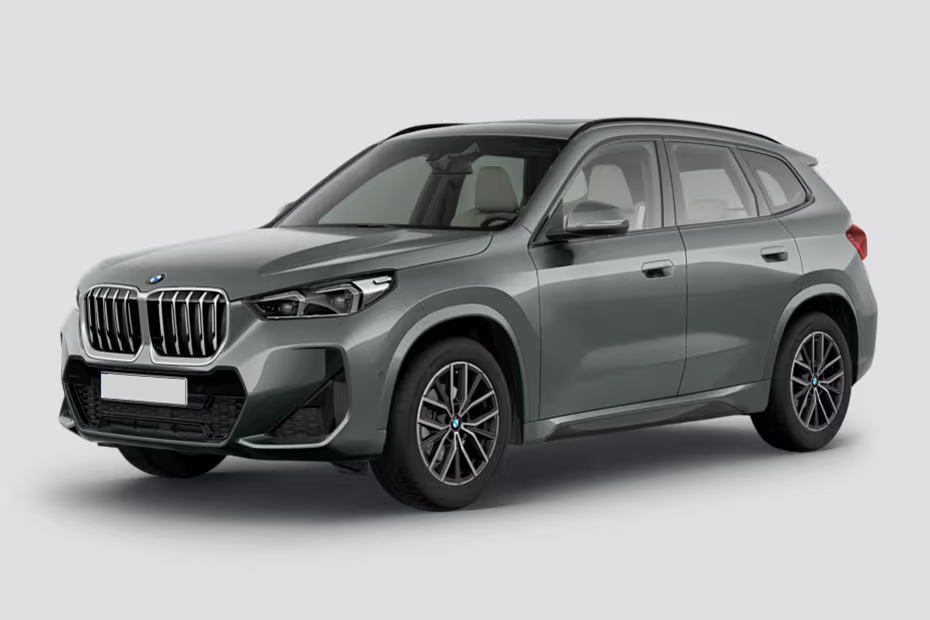
BMW X1

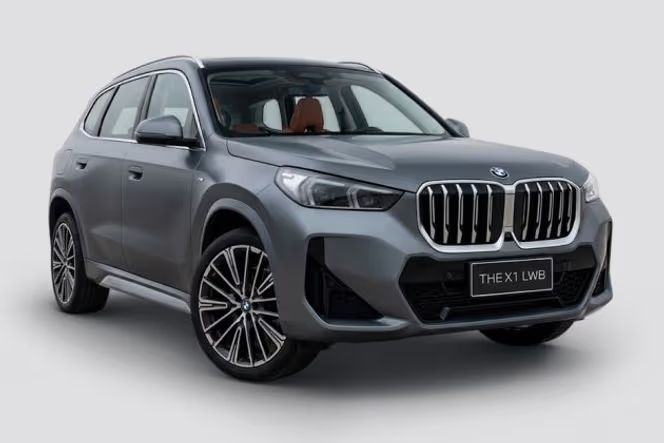
The BMW X1 is the brand's bread and butter in India right now. It's the car most first-time luxury buyers pick, and for good reason. Premium cabin, sensible size for Indian roads, good tech, decent efficiency. Nothing about it feels like a compromise.

BMW 3 Series

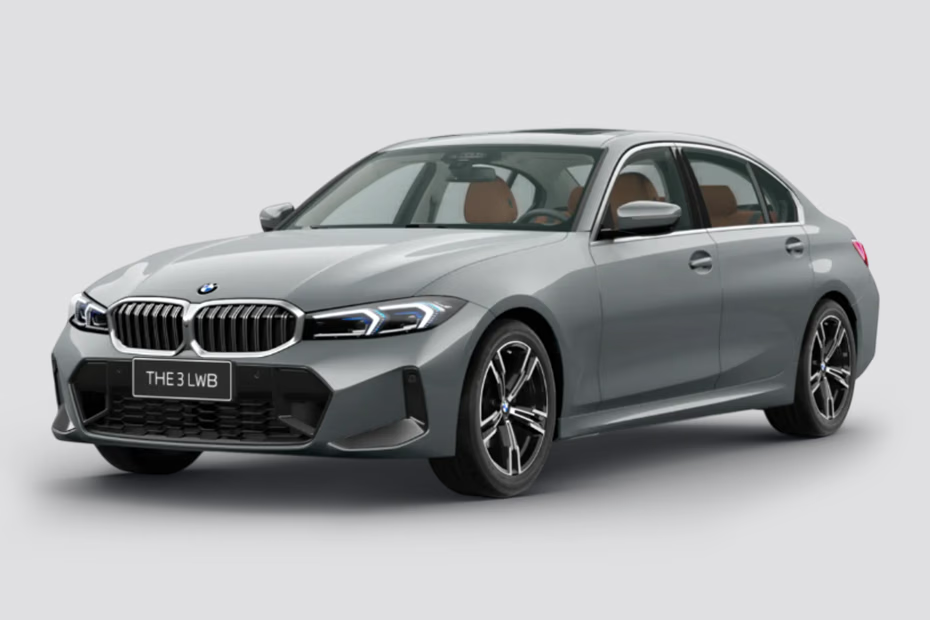
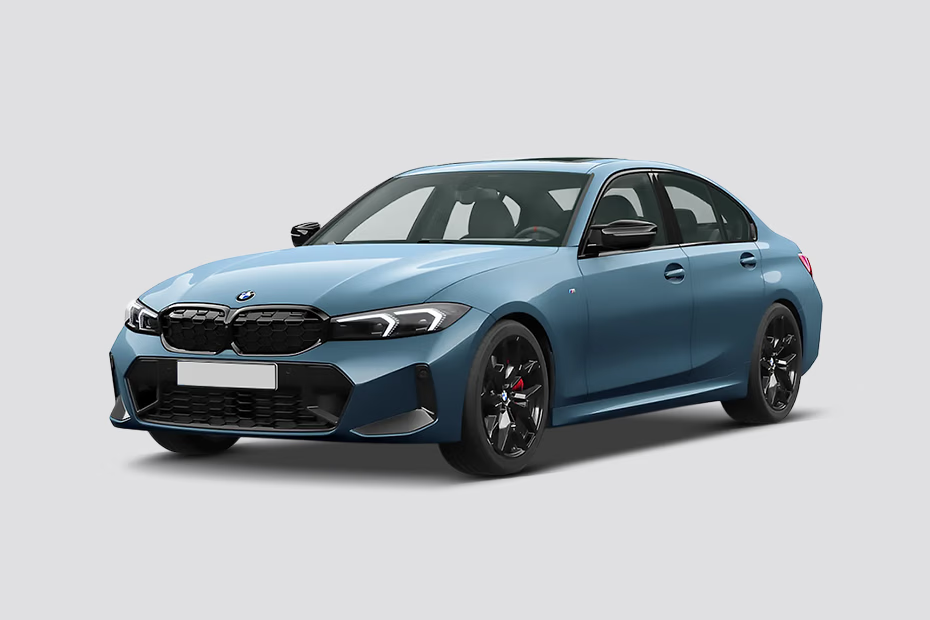
Enthusiasts have called the BMW 3 Series the benchmark sports sedan for decades, and they're not wrong. It handles like nothing else in its class, yet you can use it daily without complaint. If one car explains the whole Ultimate Driving Machine idea, it's this one.

BMW 5 Series

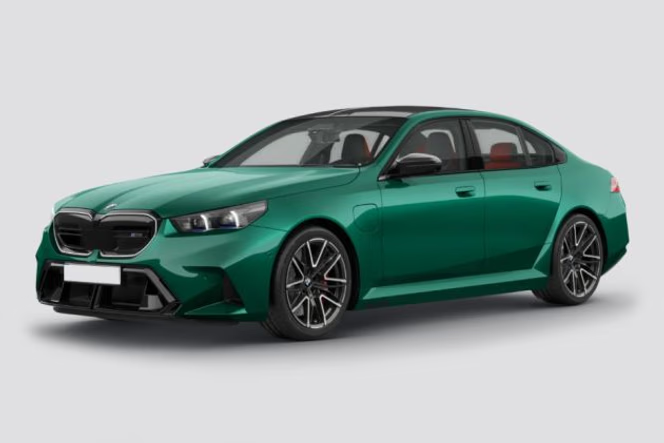
The BMW 5 Series is the executive's car. Spacious, plush, quick when you want it to be. A lot of business owners in India buy this as their "I've made it" car, and it wears that role well.

BMW 7 Series

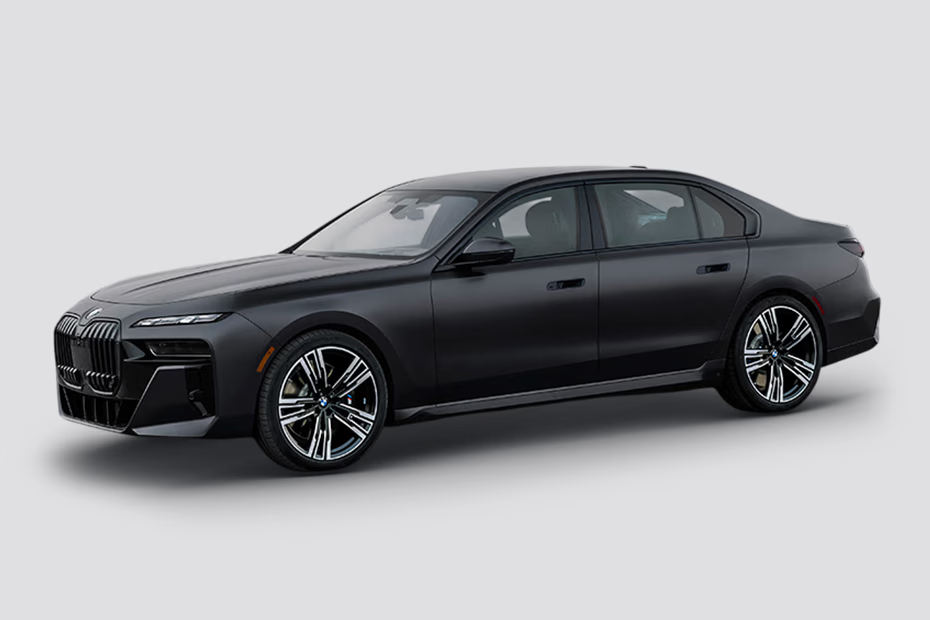
The BMW 7 Series is peak BMW luxury. Massive rear seats, theatre-level screens, materials that feel genuinely expensive, and driver assistance tech that borders on showing off. It goes toe to toe with the S-Class, which is saying something.

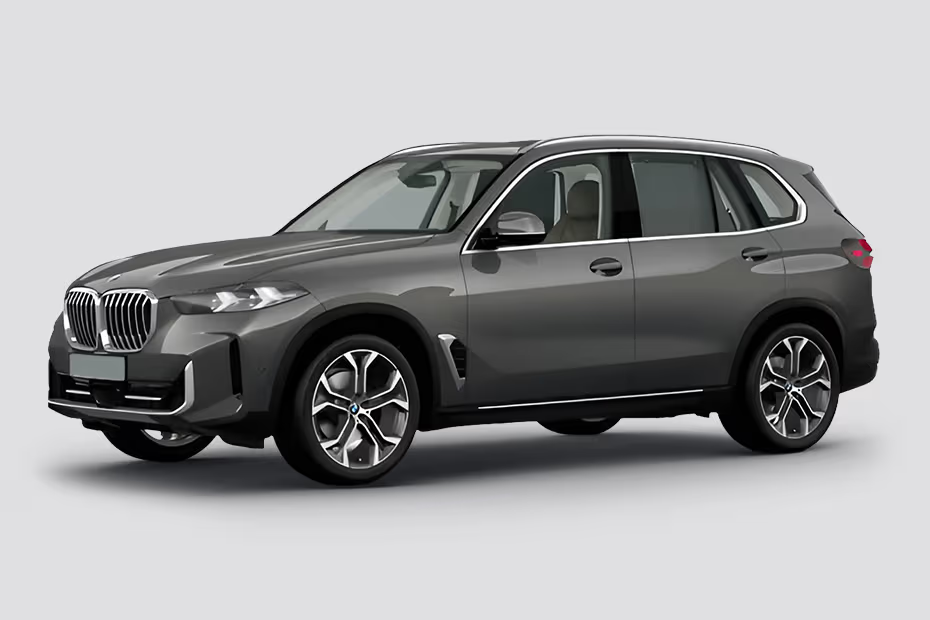
BMW X5

The BMW X5 might be the most complete SUV BMW makes. Powerful, spacious, loaded with safety kit, and still fun on a good road. It's been popular in India for years and I don't expect that to change.

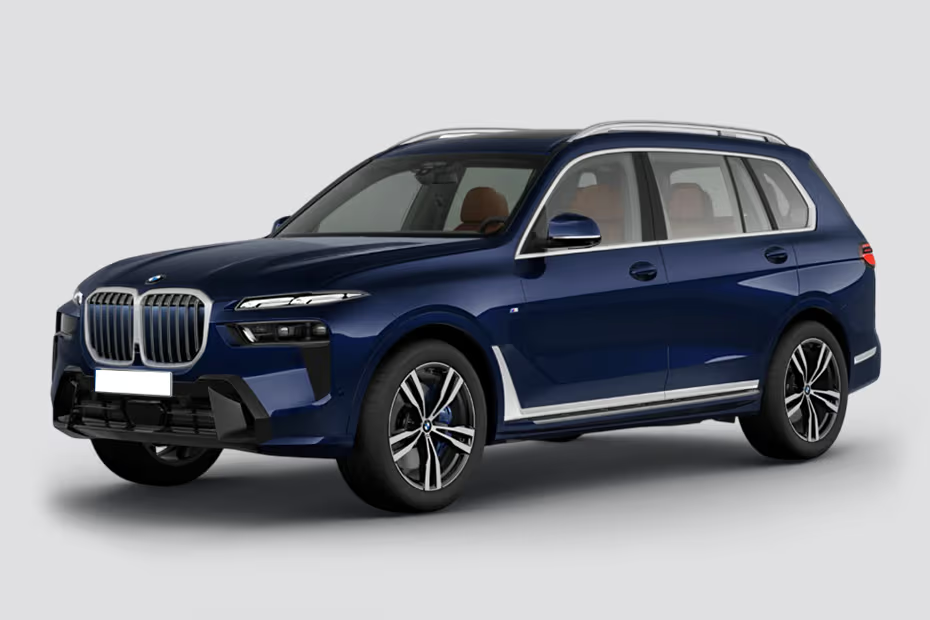
BMW X7

The BMW X7 is the flagship SUV. Three rows, serious road presence, and comfort that rivals the 7 Series in some ways. Big families with big budgets love this thing.

BMW Z4 Roadster

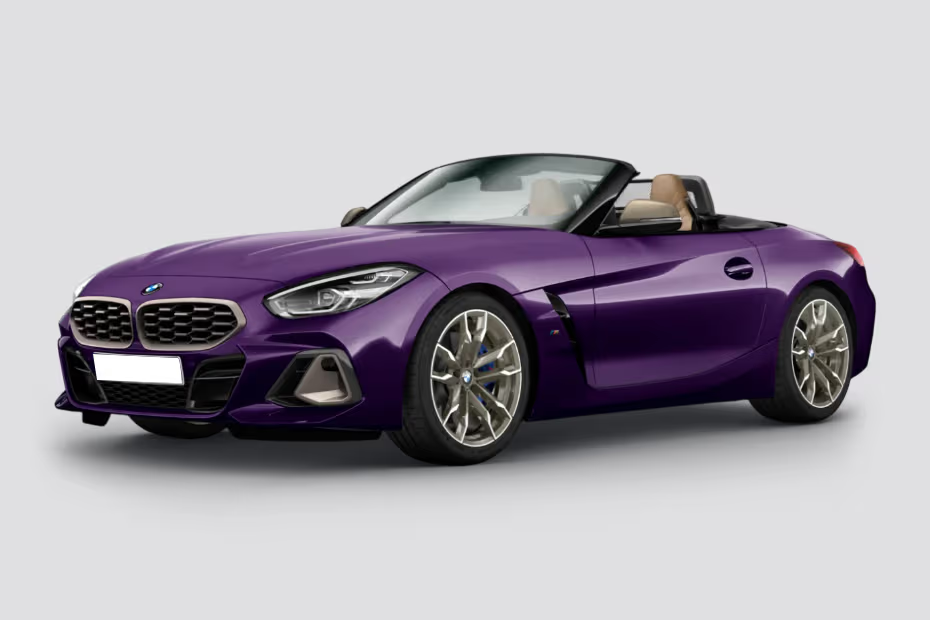
Want the roof off? The BMW Z4 is your car. Sharp handling, strong turbo engines, and looks that turn heads even in a market flooded with SUVs.

BMW M Models

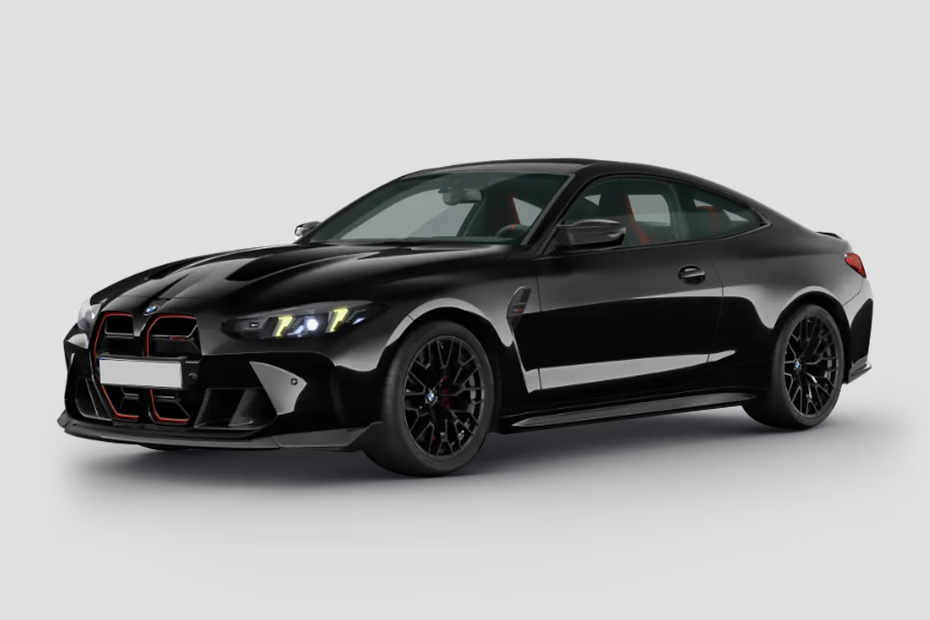
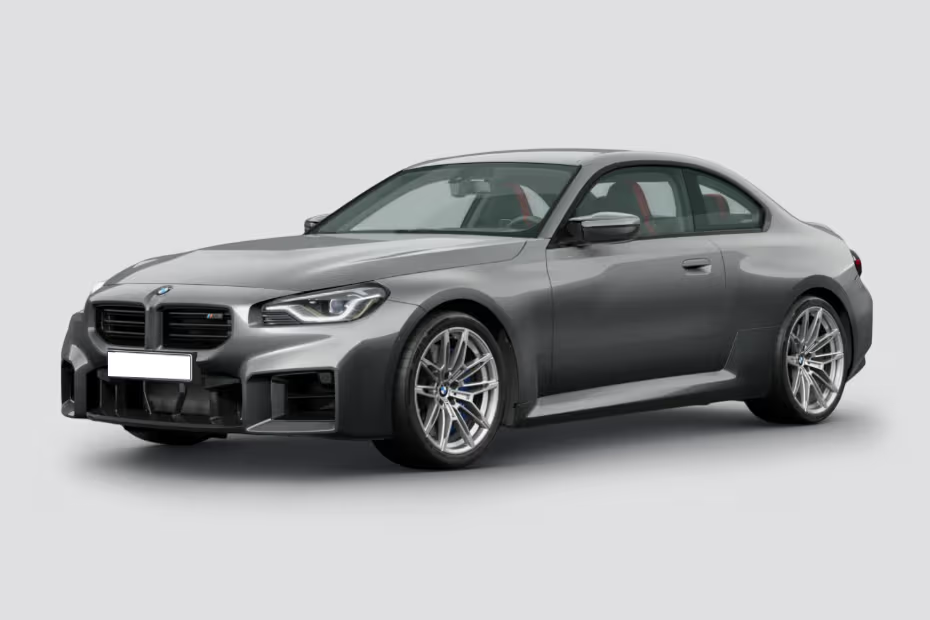
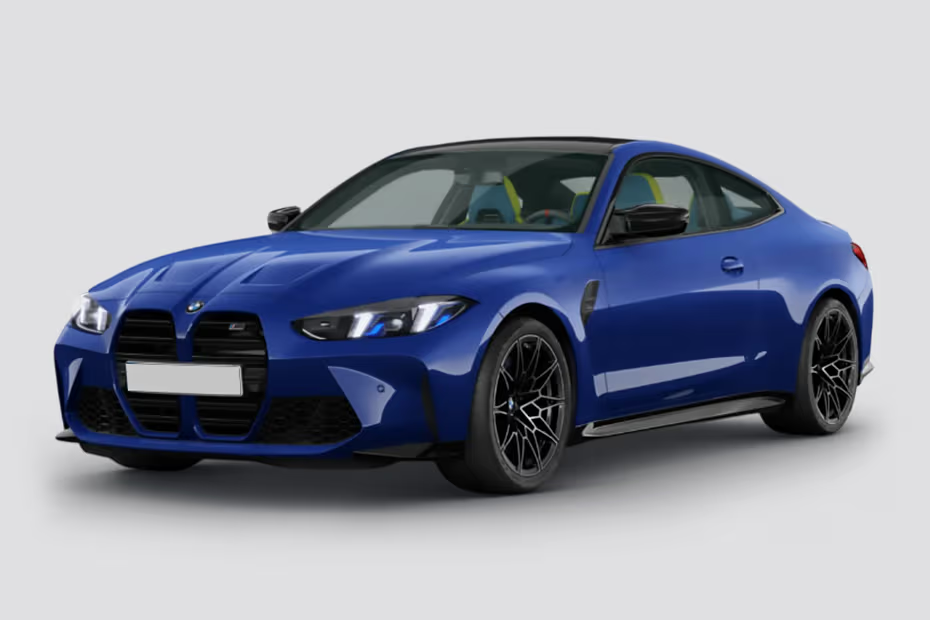
Then there's the M division. The BMW M2, M4 Competition, M5 and XM are cars you buy with your heart. Track-bred engineering that you can still drive to office. India has a small but very passionate M community, and it's growing.

Why Are BMW Cars Popular?

BMW is renowned for combining luxury, performance, and advanced technology. Its vehicles deliver engaging driving dynamics, premium interiors, powerful petrol, diesel, hybrid, and electric powertrains, along with modern infotainment and comprehensive safety features. With a wide range of sedans, SUVs, M models, and EVs, plus technologies like BMW ConnectedDrive and xDrive, BMW remains one of the most popular luxury car brands in India. .

BMW's Main Competitors in India

No brand exists in a vacuum, and BMW's rivals in India are serious players.

Mercedes-Benz is the obvious one. The two have been trading punches in the sedan and SUV space for years. Audi, Volvo, Lexus and Jaguar Land Rover fight for the rest of the pie, and Porsche and MINI cover the niches.

The key competitors:

  • Mercedes-Benz
  • Audi
  • Volvo
  • Lexus
  • Jaguar
  • Land Rover
  • Porsche
  • MINI

Segment-wise it plays out like this. The BMW 3 Series fights the C-Class and the A4. The BMW X1 takes on the GLA, Q3 and XC40. At the very top, the BMW 7 Series battles the S-Class, the A8 L and the Lexus LM.

The reason BMW holds its ground is range. Entry-level luxury, full-fat M cars, EVs, it covers everything, so a rival winning one segment never really hurts the overall business.

BMW Technology & Safety Features

BMW cars in India come equipped with advanced technology and safety features, including the BMW Curved Display, Operating System 9, ConnectedDrive, Wireless Apple CarPlay & Android Auto, Head-Up Display, Panoramic Sunroof, and premium audio systems. Safety features include Adaptive Cruise Control, Lane Keeping Assist, Blind Spot Detection, 360-degree Camera, Multiple Airbags, Electronic Stability Control (ESC), ABS with EBD, and xDrive All-Wheel Drive on select models, ensuring a safe and connected driving experience.

BMW Sedan Cars in India

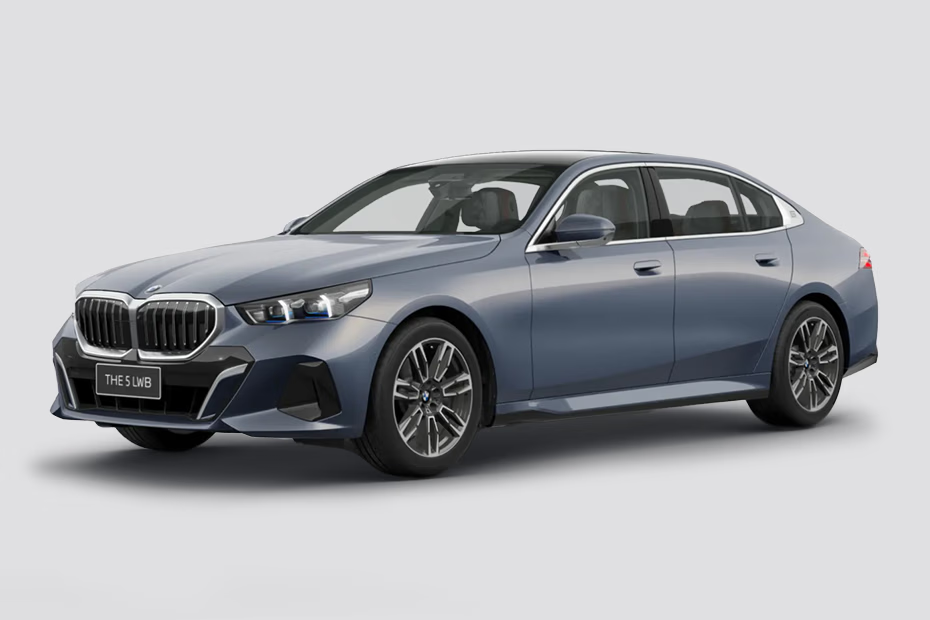
BMW offers a premium range of sedans, including the 2 Series Gran Coupé, 3 Series Long Wheelbase, 5 Series, 7 Series, and electric i5 and i7. From entry-level luxury to flagship comfort, BMW sedans are known for their performance, advanced technology, and premium interiors.

BMW SUV Cars in India

BMW's SUV lineup includes the X1, X3, X5, X7, XM, iX1, and iX. Whether you're looking for a compact luxury SUV or a full-size flagship, BMW SUV cars in India offer a blend of comfort, practicality, and dynamic driving.

BMW Sports Cars in India

BMW's sports car range features the Z4 Roadster, M2, M4 Competition, and M8 Competition. These models combine powerful engines, sharp handling, and iconic M performance for driving enthusiasts.

BMW M Cars in India

The BMW M lineup includes the M2, M4 Competition, M5, XM, and M8 Competition. Developed by BMW M GmbH, these performance models feature upgraded engines, sport-tuned suspension, larger brakes, and track-inspired technology.

BMW Electric Cars in India

BMW's electric lineup includes the iX1, i4, i5, i7, and iX. With impressive driving range, fast charging, and premium features, BMW electric cars in India are leading the brand's transition toward sustainable luxury mobility.

BMW Hybrid Cars in India

BMW currently offers the XM as its flagship plug-in hybrid in India, combining a powerful petrol engine with electric assistance. The brand is expected to introduce more hybrid models as demand for electrified vehicles grows.

BMW Convertible Cars in India

The BMW Z4 Roadster is BMW's only convertible in India. Its retractable soft-top roof, sporty design, and turbocharged engine make it one of the country's most desirable luxury open-top sports cars.

BMW Manufacturing in India

BMW manufactures several models at its Chennai, Tamil Nadu plant through CKD (Completely Knocked Down) assembly. Local production helps keep BMW car prices in India competitive while maintaining global quality standards and supporting a strong nationwide sales and service network.

Upcoming BMW Cars in India

The pipeline is busy. Based on what's expected over the next few years, the upcoming BMW cars in India include:

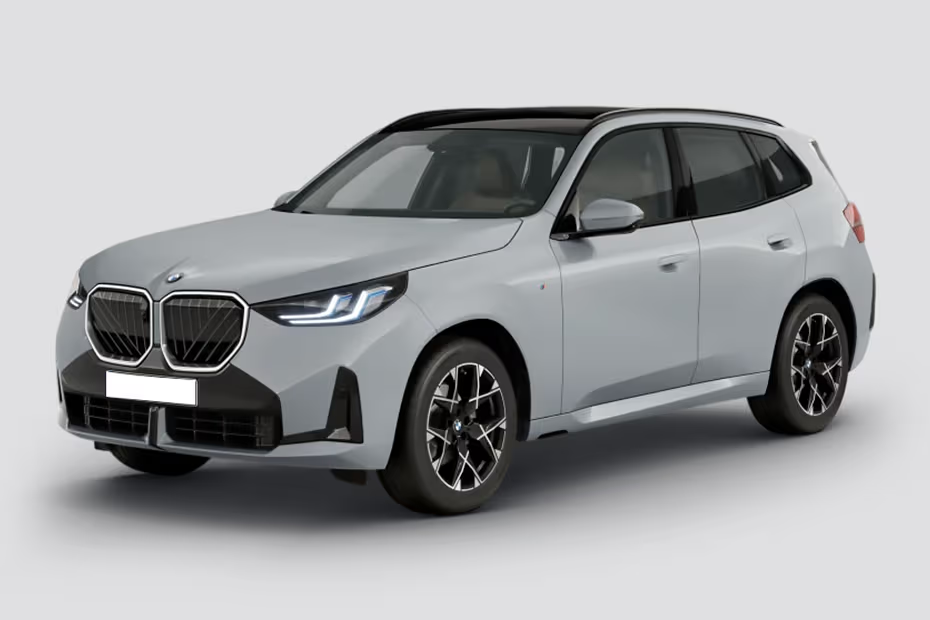
  • New BMW X3
  • Updated BMW X5
  • Facelifted BMW X7
  • New-generation BMW 5 Series variants
  • BMW Neue Klasse electric models
  • New BMW M Performance models
  • Additional BMW i Series electric cars
  • Updated BMW Z4 Roadster
  • New luxury plug-in hybrid models

The Neue Klasse models are the ones to watch. That's BMW's next-generation EV platform, and it promises longer range, faster charging and better connectivity. As charging infrastructure spreads across India, expect the electric side of the lineup to grow fastest.

BMW Cars Price List in India (2026)

ModelApprox. Ex-Showroom Price
BMW 2 Series Gran Coupé₹44.40 – ₹47.50 Lakh
BMW 3 Series LWB₹62.60 – ₹65.00 Lakh
BMW 5 Series₹72.90 – ₹78.00 Lakh
BMW 7 Series₹1.84 – ₹1.90 Crore
BMW X1₹50.80 – ₹54.30 Lakh
BMW X3₹75.80 – ₹78.00 Lakh
BMW X5₹97.80 Lakh – ₹1.15 Crore
BMW X7₹1.32 – ₹1.38 Crore
BMW Z4 Roadster₹92.90 – ₹98.00 Lakh
BMW M2₹1.03 Crore
BMW M4 Competition₹1.56 Crore
BMW M8 Competition₹2.44 Crore
BMW XM₹2.60 Crore
BMW iX1₹49.00 Lakh
BMW i4₹72.50 Lakh
BMW i5₹1.20 Crore
BMW i7₹2.05 – ₹2.15 Crore
BMW iX₹1.40 Crore

*Prices are approximate ex-showroom figures and vary by city, variant, optional packages and dealer offers. Your final BMW on-road price in India will add RTO charges, insurance and applicable taxes on top.

BMW cars in India cover more ground than almost any luxury brand here. The 2 Series Gran Coupé and X1 open the door at around ₹44.40 lakh. The 7 Series, X7 and XM sit at the top, past ₹2.60 crore in the XM's case. Sedans, SUVs, sports cars, EVs, hybrids, convertibles. Whatever kind of luxury buyer you are, there's a BMW with your name on it.

And the brand isn't standing still. Local assembly keeps prices sharp, the EV lineup keeps expanding, and the upcoming BMW cars in India list suggests the next few years will be busier still.

BMW Car Models

Genuine Review To The Find Right Car

bg

BMW Car News

Latest News

How to Get FASTag for Your Car in 2026 – Complete Online & Offline Guide

how to get fastag for your car

19 days ago

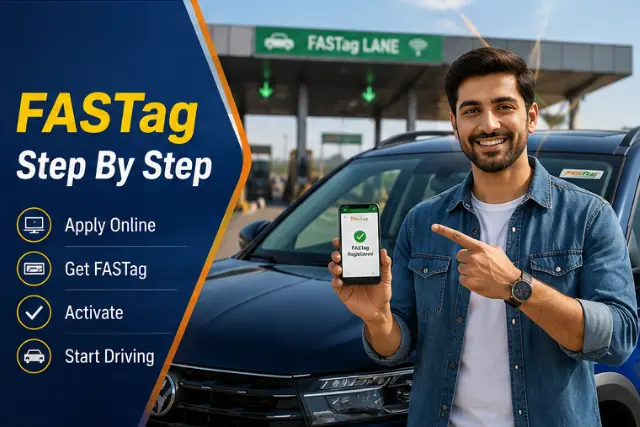
Written by: VahanKhoj Editorial Team | Reviewed by: Nitish Ranjan Automotive Expert | Last Updated: July 2026 Quick Answer: To get FASTag for your car: (1) Keep your RC, ID proof, and passport photo ready. (2) Visit any bank's website, app, or nearest toll plaza Point of Sale counter. (3) Fill the form, upload documents, pay the tag fee + initial balance. (4) Receive your FASTag, stick it on your windshield — done. The whole process takes 15–30 minutes online, or same-day offline at a toll plaza. If you have ever been stuck in a long, slow-moving cash lane at a toll plaza while FASTag vehicles zip through without stopping — you already know it is time to get one. But if you are still wondering how to get FASTag for your car, you are not alone. Millions of Indian drivers search for this every month, and the good news is that the process is actually very simple. FASTag is a small RFID sticker fixed on your car's windshield that automatically deducts toll payments when your vehicle passes through a toll collection point on a national highway. It is linked to a prepaid account — which can be a bank account, wallet, or UPI — and every toll deduction triggers an instant SMS alert on your registered mobile number. Since January 2021, FASTag has been mandatory for all four-wheelers on national highways. No FASTag means double toll charge — every single time. In this guide, VahanKhoj walks you through exactly how to get FASTag for your car — whether it is a new car, an old car, or a company-owned vehicle — both online and offline, step by step. What is FASTag and Why Do You Need It? FASTag is based on RFID (Radio Frequency Identification) technology. It is a sticker — technically called an RFID tag — that is affixed to the inner surface of your car's windshield. When your car approaches a toll gate, a scanner at the toll booth reads the tag, and the toll amount is instantly deducted from your linked FASTag account. You do not have to stop, roll down your window, or handle cash. Benefits of FASTag at a Glance FASTag operates under the National Electronic Toll Collection (NETC), which enables seamless electronic toll payments across India. You can learn more from the official NETC . No cash needed at toll plazas - 100% cashless toll payments Save time - FASTag lanes move 5x faster than cash lanes SMS alert on your mobile number for every toll deduction - full transparency Check balance anytime via app, SMS, or your bank's portal - fastag balance check in seconds Valid for 5 years from issue date - recharge as needed Accepted at 750+ toll plaza locations across India on all national and state highways Avoid double toll penalty - no FASTag = 2x toll fee as per NHAI rules FASTag at a Glance Feature Details Technology RFID Validity 5 Years Recharge UPI, Net Banking, Cards Accepted 750+ Toll Plazas Mandatory Yes (4-Wheelers) Penalty Without FASTag Double Toll Documents Required to Get FASTag for Your Car Before you apply — online or offline — keep these KYC documents ready. Whether you are applying through SBI FASTag, HDFC FASTag, ICICI FASTag, IDFC First Bank FASTag, or Axis Bank — the basic document list is the same. Document What It Proves Accepted Options Vehicle Registration Certificate (RC) Vehicle ownership & details Original RC or RC copy ID Proof (KYC) Identity verification Aadhaar, PAN Card, Passport, Driving Licence, Voter ID Address Proof Address verification Aadhaar, Utility bill, Bank statement, Rental agreement Passport-size Photograph Owner / authorised driver identity Recent photo of vehicle owner Bank Account Details (optional) Linking for auto-recharge Required by some banks for auto-debit setup Please note that all documents should be in the vehicle owner's name. If the owner is not present during the time of application, then the driver can show his/her photo ID proof as an identification. Company owned vehicles might require other document proofs such as company registration. Documents for FASTag for New Car If you are wondering how to get FASTag for a new car — in most cases, your car dealership will handle this for you during delivery. New cars registered after 2017 come with FASTag as part of the mandatory pre-fitment requirement. However, if your dealer has not done it or you want to switch to a specific bank's FASTag, the documents needed are the same — your new RC (or temporary registration), ID proof, and a passport photo. Documents for FASTag for Old Car For how to get FASTag for old car — the process is identical to any other car. Keep your existing RC, a valid ID proof, and your passport-size photo. If you purchased a second-hand car, ensure the RC has been transferred to your name before applying. An RC still in the previous owner's name can cause KYC mismatch issues. Documents for Company-Owned Vehicle FASTag For those searching how to get FASTag for company owned car — in addition to the standard documents, you will also need: company's GST registration certificate or incorporation certificate, an authorisation letter on company letterhead, and the authorised signatory's ID proof. Corporate FASTag accounts also allow bulk issuance and centralised billing — useful for fleet managers. How to Get FASTag for Car Online - Step by Step The easiest way to get FASTag online for a car is through your bank's website or app. Here is the general process that works across all major banks — SBI, HDFC, ICICI, IDFC First, and Axis: Choose your FASTag issuing bank - See our bank comparison table below. Pick the one where you already have a savings account for easier KYC. Visit the bank's FASTag page or app - Navigate to the FASTag section on their website or download their banking app. Register / Log in - Enter your mobile number, email ID, and vehicle registration number to create your FASTag account. Fill the application form - Enter vehicle details, owner name, address, and other required information accurately. Upload required documents - Scan or photograph your registration certificate, ID proof, and passport photo. Ensure the image is clear — blurry documents get rejected. Make payment - Pay via UPI, net banking, or debit card. The total cost includes: tag issuance fee (~₹100), a refundable security deposit (varies by vehicle type), and your initial fastag balance. Receive your FASTag - After document verification (usually 24–48 hours), the FASTag sticker is delivered to your registered address. Activate and install - Follow activation instructions from your bank. Peel the sticker and fix it on the inner centre of your windshield, above the dashboard. Pro Tip: If you need FASTag the same day, do not apply online for home delivery. Instead, visit your nearest toll plaza Point of Sale (POS) counter or a participating bank branch — you can walk out with an active FASTag in under 30 minutes. How to Get FASTag Online - Bank-Wise Quick Guide Different banks offer FASTag through slightly different channels. Here is where to go for each major issuer: Bank / Issuer How to Apply Online App Available? Key Feature SBI FASTag fastag.bank.sbi | SBI YONO App Yes (YONO) Best for existing SBI account holders — linked directly to savings account HDFC FASTag hdfcbank.com/fastag | HDFC Mobile App Yes Strong cashback offers, HDFC FASTag KYC online process is fast ICICI FASTag fastaglogin.icicibank.com | iMobile App Yes Also get via etoll by ICICI — widely available, fast recharge via ICICI FASTag app IDFC First Bank FASTag idfcfirstbank.com | IDFC First Bank App Yes IDFC FASTag App is user-friendly, best for non-HDFC/ICICI users Axis Bank FASTag axisbank.com/fastag Yes Axis FASTag login and recharge via Axis Mobile app Airtel Payments Bank airtel.in/bank/fastag Yes (Airtel Thanks) Best for Airtel users — single app for FASTag + mobile recharge PayTM / NETC FASTag paytm.com/fastag Yes (PayTM) Instant digital FASTag — NETC FASTag linked to PayTM wallet KVB FASTag kvb.co.in Yes KVB Bank FASTag for customers in South India Federal Bank FASTag http://federalbank.co.in/ Yes Popular in Kerala — how to get FASTag for car in Kerala How to Get FASTag for Car Offline At Toll Plaza or Bank Branch? If you want your FASTag the same day or are uncomfortable with online processes, the offline route through a point of sale counter is your best option. Option A: At a Toll Plaza (Fastest Method) Drive to your nearest NHAI or NETC-operated toll plaza that has a FASTag sales counter. Visit the Point of Sale (POS) counter — usually a designated booth near the main toll lanes. Submit your required documents — RC copy, ID proof, and passport photo. Fill the FASTag application form provided by the counter. Pay the issuance fee, security deposit, and initial fastag balance — cash or UPI accepted. Receive your FASTag sticker immediately — get it fixed on the windshield right there. Option B: At a Participating Bank Branch Walk into any branch of SBI, HDFC, ICICI, Axis, IDFC First, or other bank fastag issuing banks. Ask for a FASTag application at the service desk. Fill in the form with your vehicle details, submit id proof and RC. Pay fees and collect your FASTag on the spot (subject to stock availability at branch). How to Get a FASTag for a New Car Without Registration? One of the most common queries is how to get FASTag for a new car without registration — especially when a buyer has just picked up a new car but the permanent RC has not arrived yet. Answer: Yes, you can get FASTag for a new car using the temporary registration certificate (Form 23) issued by the dealership, along with your invoice copy and ID proof. Most banks and toll plaza POS counters accept the temporary RC. Once your permanent RC arrives, update your FASTag account details with the correct RC number. Steps for New Car Without Permanent RC: Get your temporary registration certificate (Form 23) from the dealership. Carry your purchase invoice, temporary RC, and ID proof. Visit the nearest toll plaza POS counter or your bank's FASTag portal. Apply with the temporary RC details. Once permanent RC arrives (usually 30–90 days), update the RC number in your fastag account via the bank's app or customer care. FASTag Cost - Issuance Fees, Security Deposit & Initial Balance FASTag charges may vary slightly depending on the issuing bank. For the latest guidelines and toll payment information, refer to the official NHAI FASTag portal . Here is a breakdown of what you pay when you buy FASTag online or offline: Charge Component Amount (Approx) Refundable Tag Issuance Fee ₹100 (one-time) No Security Deposit (Private Car) ₹200 – ₹250 Yes, on closure Security Deposit (Commercial Vehicle) ₹300 – ₹500 Yes, on closure Minimum Initial Balance (Private Car) ₹100 – ₹200 Yes, remains in account Total Approximate Cost (Private Car) ₹400 – ₹550 Partial FASTag Sticker Validity 5 Years - Note: Security deposits and minimum balance requirements vary slightly by bank and vehicle type. Always check the specific bank's website for the latest fee structure before applying. How to Install FASTag Sticker on Your Car's Windshield Getting the FASTag sticker is only half the job. Placing it correctly on the windshield is equally important — a wrong placement means the toll plaza scanner cannot read it, and you end up being charged double toll anyway. Here is how to do it right: Clean the windshield surface - Use a dry cloth to wipe the area where you will stick the tag. Any dust, grease, or moisture will reduce adhesion. Choose the correct position - Stick it on the inner surface of the windshield, at the top centre, just above the rear-view mirror bracket. It must face outward so the scanner can read the RFID chip. Peel the backing slowly - Do not rush. The sticker has a paper backing — peel it carefully from one corner. Press firmly - Once placed, press down firmly for 30 seconds. Do not peel it off and re-stick — the adhesive weakens and the tag may fail to scan. Do not cover the tag - Never place anything (tinted film, stickers, paper) over the FASTag. It blocks the RFID signal. How to Recharge FASTag - All Methods Once your Fastag balance runs low, recharging it is as easy as recharging a mobile number. Here are all the ways to do a fastag recharge: Recharge Method How to Do It Time Taken Bank's Mobile App Log in → FASTag section → Add money via UPI or debit card Instant Google Pay / PhonePe / PayTM Open app → Search 'FASTag Recharge' → Enter vehicle number → Pay Instant Bank Website Log in to net banking → FASTag recharge → Pay online Instant NHAI My FASTag App Download → Log in with mobile number → Add balance via UPI Instant At Bank Branch / ATM Visit branch or use ATM cash deposit machine Same day Fastag Recharge by Vehicle Number On PayTM / Google Pay — search by vehicle number without login Instant Pro Tip: Enable auto-recharge through your bank — set a minimum balance threshold (e.g. ₹200). Every time the balance drops below this, the system automatically recharges your FASTag from your linked account. You never have to worry about an empty balance at a toll gate again. How to Check FASTag Balance Want to do a quick fastag balance check? You have five easy options: SMS - Type BAL and send to your bank's FASTag helpline number (check your bank's website for the exact number) Bank App - Log in to your bank's app and check the FASTag section for real-time balance NHAI My FASTag App - Check fastag status and transaction history NETC FASTag Portal - Visit netc.org.in and check netc fastag status with your vehicle number Missed Call - Some banks like HDFC and SBI offer a missed call balance check service on a dedicated number Conclusion Now that you know exactly how to get FASTag for a car — whether it is a new vehicle, an old one, or a company-owned car — there is really no reason to delay. The process takes less time than filling up your fuel tank. Pick your preferred bank, keep your RC and id proof handy, and apply online right now. Or drive to the nearest toll plaza and get it done today. And once you have your FASTag sorted, come back to VahanKhoj to check your vehicle's registration details, RC status, insurance validity, and more — all free, all instant. Expert Tip: If you travel frequently on national highways, choose a FASTag issued by the bank you already use. It simplifies KYC, makes recharges easier, and helps you manage transactions through a single banking app. Also, keep your RC and mobile number updated to avoid activation or verification issues. Frequently Asked Questions How to get FASTag for my car if I don't have a bank account? You can get FASTag through NETC FASTag (netc.org.in) or through payment wallets like PayTM — no savings account required. However, you will need a valid mobile number, ID proof, and vehicle RC. The wallet-based FASTag works similarly to a bank-linked one. Is FASTag mandatory for all cars in India? Yes. NHAI made FASTag mandatory for all four-wheelers on national highways from January 1, 2021. Vehicles without a valid FASTag are charged double the toll fee at all FASTag-enabled toll plazas. From April 2026, cash lanes have been discontinued at many major toll plazas — making FASTag effectively the only way to pass. How to get FASTag for my car online — same day delivery? For same-day FASTag online for car delivery, you need to select an express delivery option if offered by the bank (available in metro cities). Otherwise, for same-day pickup, visit the nearest toll plaza POS counter or a bank branch — no waiting, FASTag issued on the spot. How to get a free FASTag for a car? During certain promotional periods, some banks and NHAI have offered free FASTag (waived issuance fee) as part of campaigns. New cars from dealers often include FASTag free of charge as part of the vehicle package. However, you still need to load the minimum balance (₹100–₹200) to activate it. Can I get FASTag for a car in someone else's name? FASTag is linked to the vehicle's registration, which is in the owner's name. If the vehicle is in your name, you can get the FASTag. If it is in someone else's name (e.g. a family member), they need to apply or you need an authorization letter and their ID proof. How to get SBI FASTag for a car? Visit fastag.bank.sbi or the SBI YONO app. For how to get SBI FASTag for car: log in or register → go to FASTag section → fill vehicle details → upload RC and ID proof → pay via UPI or debit card → FASTag ships to your address. Existing SBI customers get the FASTag directly linked to their savings account for easy recharge. What is the FASTag monthly pass and toll monthly pass? NHAI offers a FASTag monthly pass and toll monthly pass for frequent commuters who use the same toll plaza daily. Instead of paying per trip, you pay a fixed monthly or annual fee for unlimited crossings at a specific toll. Check the specific toll plaza's NHAI page for availability and pricing — not all plazas offer this option. How to check FASTag status? Check fastag status through: your bank's mobile app, the NETC portal (netc.org.in → 'Check NETC FASTag status'), or the NHAI My FASTag app. If your tag shows as Blacklisted, it usually means your account balance has been negative for too long — recharge it and the status should be restored within a few hours.

Read More

Maruti Unveils India's First Flex-Fuel Wagon R, Supports Ethanol Blends from E20 to E85

maruti suzuki wagon R flex fuel car

about 1 month ago

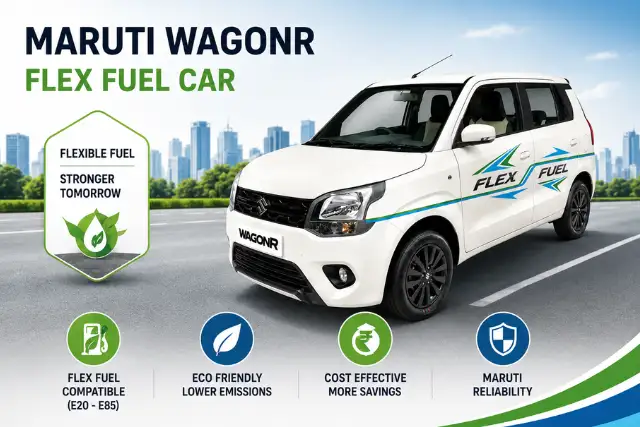
India has taken another major step toward cleaner and more sustainable transportation with the launch of the Maruti Suzuki Wagon R Flex Fuel, the country's first passenger car capable of running on ethanol-petrol blends ranging from E20 to E100. The vehicle was unveiled in the presence of Union Road Transport and Highways Minister Nitin Gadkari, Petroleum and Natural Gas Minister Hardeep Singh Puri, and Hisashi Takeuchi. Maruti Suzuki Wagon R Flex Fuel- the first passenger flex fuel car from India runs on different variants of ethanol-petrol mixes from E20 to up to E85 and targets to reduce dependency on petrol, lower emissions, and expand the ethanol fuel segment in India, which is growing at a rapid pace. To introduce this technology to the masses, Maruti Suzuki has selected India's most reliable hatchback- the Wagon R . And the output is an utterly functional family car that can run on variable ethanol-petrol mixes without demanding any manual intervention on the driver's part. Regardless of whether you are a current Wagon R owner, a car enthusiast, or just curious to learn about the future of fuel in India, here's everything you should learn to know. What Is Maruti Suzuki Wagon R Flex Fuel? Basically, the Wagon R Flex Fuel is just a modification/tuned-up version of the Wagon R hatchback. Where a petrol-powered car would run only on a petrol blend, the flex-fuel variant can run on various blends of ethanol-petrol. The basic idea behind a FFV is that it recognises the blend ratio by itself and applies the changes required by its engine automatically. You will not need to bother whether the fuel blend consists of more petrol or more ethanol. Here are a few typical fuel blends that this flex-fuel car would be able to run on: E20 (20% Ethanol + 80% Petrol) E50 (50% Ethanol + 50% Petrol) E85 (85% Ethanol + 15% Petrol) According to Maruti Suzuki, the Wagon R Flex fuel was developed keeping in mind India’s long-term goals of energy and bio-fuel security. What Is a Flex-Fuel Vehicle (FFV)? A Flex-Fuel Vehicle (FFV) is a car that can run on different blends of petrol and ethanol. It automatically detects the fuel mixture and adjusts the engine settings, so drivers don't need to make any manual changes. This technology allows vehicles like the Maruti Suzuki Wagon R Flex Fuel to use fuel blends ranging from E20 to E85, offering greater fuel flexibility while supporting cleaner and more sustainable mobility solutions. Why Is the Wagon R Flex Fuel Important? Wagon R Flex Fuel marks a major evolution that could define India's transportation fuel future: Less dependence on imported oil Most crude oil for India is imported, whereas ethanol is produced domestically from renewable agricultural feedstock like sugarcane. Lower Carbon emissions Greater amounts of ethanol can contribute to reduced greenhouse emissions over traditional petrol vehicles. Farmer benefits The higher amount of ethanol can lead to increased demand and benefit India's agriculture sector. Forward-thinking technology As ethanol infrastructure grows,flex-fuel vehicles are poised to become more accessible in day-to-day use. How Does Wagon R Flex Fuel Work? The technology behind a flex-fuel vehicle is more advanced than simply filling the tank with ethanol. To handle higher ethanol concentrations, manufacturers typically upgrade: Fuel injectors Fuel pumps Fuel lines Engine management software Ethanol sensors Engine calibration systems The vehicle would then be able to run reliably and perform well even with different proportions of ethanol. Wagon R Flex Fuel Specifications Though the exact specs haven't been revealed by Maruti Suzuki so far, word is that the car would be based on the familiar Wagon R model. It is expected to be powered by a reworked K-series engine designed to handle fuel blends. Some of the known features: Feature Expected Details Fuel Compatibility E20 to E85 (and higher compatibility in some reports) Vehicle Type Hatchback Transmission Manual/Automatic (expected) Seating Capacity 5 Persons Fuel Type Ethanol-Petrol Blends Brand Maruti Suzuki Will the Wagon R Flex Fuel Save Money? A commonly asked question is: Is Flex Fuel cheaper than petrol? In all likelihood, yes. Ethanol is cheaper than petrol, and if it is competitively priced and becomes widely available, then a petrol car will not necessarily be cheaper to run. Your fuel savings will depend on: Local prices of fuel Availability of ethanol Conditions under which you drive Car's fuel efficiency Because ethanol has less energy per litre than petrol, the actual fuel economy may change when driving a car that uses a high proportion of ethanol. Is Ethanol Cheaper Than Petrol? In many cases, ethanol is cheaper than petrol, which can help reduce fuel costs. However, the actual savings depend on factors such as local fuel prices, ethanol availability, and your vehicle's fuel efficiency. Since ethanol contains less energy per litre than petrol, mileage may vary when using higher ethanol blends. Wagon R Flex Fuel vs Regular Wagon R Feature Wagon R Petrol Wagon R Flex Fuel Fuel Compatibility Petrol/E20 Multiple Ethanol Blends Emissions Standard Lower Carbon Footprint Future Readiness Moderate High Fuel Flexibility Limited Excellent Ethanol Compatibility Basic Advanced Is India Ready for Flex-Fuel Cars? Fueling infrastructure remains a critical challenge. While the government is accelerating progress towards ethanol-powered mobility, ethanol dispensing outlets are not as numerous as conventional petrol pumps, and it is anticipated that this figure will surge in the coming few years. Higher ethanol blends have to be made readily available to ensure the proliferation of flex fuel vehicles. Should You Buy the Wagon R Flex Fuel? The answer depends on your driving needs. You should consider the Wagon R Flex Fuel if: You want a future-ready vehicle You support cleaner fuel technologies Ethanol fuel becomes available in your area You are looking for potentially lower fuel costs You may want to wait if: Ethanol stations are unavailable near you You prefer proven long-term infrastructure Pricing details are a deciding factor Check Vehicle Details Before Buying Any Car Before purchasing any used or new vehicle, always verify: RC details Vehicle ownership history Challan records Registration information VahanKhoj helps you instantly check vehicle information online using the vehicle registration number. Quick CTA: Check RC details, owner information, and challan records instantly on VahanKhoj before making your next vehicle purchase. Key Takeaways Maruti Suzuki Wagon R Flex Fuel is the first flex-fuel passenger vehicle. It runs on any combination of ethanol-petrol blend ranging from E20 to E85. Flex-fuel offers a way of reducing reliance on imports. Lower emissions and energy security would be an effect of ethanol-fuelled mobility. Expansion of infrastructure would be key to its widespread use. Wagon R Flex Fuel might be just the beginning of more flex fuel vehicles in the country. Frequently Asked Questions (FAQs) What Is the Price of the Maruti Suzuki Wagon R Flex Fuel? Maruti Suzuki has showcased and launched the Wagon R Flex Fuel as part of its alternative fuel strategy. However, the company has not yet announced a mass-market retail price or nationwide availability schedule. Buyers should watch for official updates from Maruti Suzuki regarding pricing and bookings. What exactly is a Maruti Suzuki Wagon R Flex Fuel? This is basically a flex-fuel-powered version of the existing Wagon R, which could be fueled with different blends of ethanol and petrol, not only petrol as it is in the current Wagon R. Can a Wagon R Flex Fuel be filled up with petrol? Of course, due to the flexibility feature, it can be filled with any kind of blend. It could be fueled in any mix. What is E85 fuel? E85 is actually a mix of ethanol and petrol, which could have a maximum 85% of ethanol while minimum of petrol (15%). Is Wagon R Flex Fuel launched in India? The Wagon R Flex Fuel has been launched in India by Maruti Suzuki. It has even become the first flex fuel-powered passenger car in India. But the availability would be dependent on operational phases. Will a flex fuel car replace a petrol car? Not at the moment, and they are also expected to operate alongside existing petrol, CNG, hybrid and electric cars as India progresses towards environmentally friendly modes of transportation. Reviewed by the Automotive Research Team This article has been reviewed for accuracy using information from official Maruti Suzuki announcements, government statements, and trusted automotive sources. Vehicle specifications, features, and availability may change over time, so readers should verify the latest details through official channels.

Read More

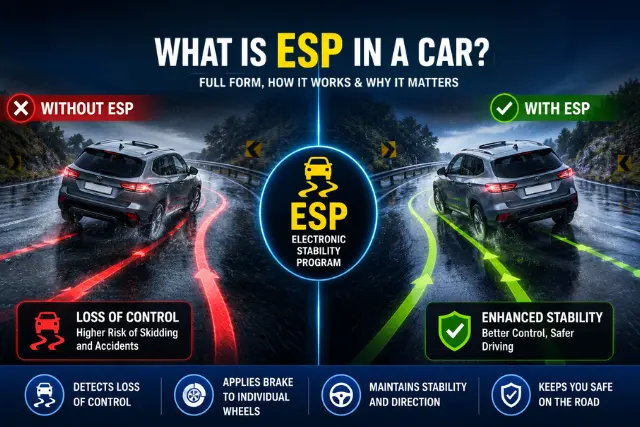
What is ESP in a Car? Full Form, How it Works & Why it Matters

what is esp in a car

about 2 months ago

Quick Answer: What is ESP in a car? ESP stands for Electronic Stability Program(also Electronic Stability Control / ESC). It is an active safety system which will automatically sense when your car begins to skid or lose its grip and will brake the wheels it deems to be moving too fast individually to correct the car. It relies upon and works with your ABS and TCS systems. Picture this: you're driving on a rain-soaked road, you steer to avoid something, and the back of the car starts sliding out. In a car without safety tech, that's where accidents happen. In a car with ESP, that sliding movement is detected and corrected in milliseconds — before you've even had a chance to react. What is ESP in a car? It's one of the most important active safety features ever developed, and understanding how it works makes you a smarter, safer driver — and a more informed car buyer. What is ESP in a Car? - The Simple Explanation ESP stands for Electronic Stability Program. It's also very commonly known as Electronic Stability Control or ESC, since most manufacturers refer to the system as the ESC but use different names. ESP (also known as ESC) stands for Electronic Stability Programme, and it's one of the most important safety features on your car. The electronic stability program (ESP) supports the driver in nearly all critical driving situations. It comprises the functions of the anti-lock braking system (ABS) and the traction control system, but can do considerably more. It detects vehicle skidding movements, and actively counteracts them. To put it in simple terms: ESP is an invisible 'buddy' to your car. It "looks" at whatever the car is doing at every tiny instant of time and compares that against whatever you're attempting to do at the wheel, and makes up the difference where it's risky, and does it automatically at speeds nobody can compete with. ESP Full Form in Car — And What Different Brands Call It The ESP full form in cars is Electronic Stability Program. However, different car manufacturers have trademarked their own names for the same technology: td {border: 1px solid #cccccc;}br {mso-data-placement:same-cell;} Brand Name Manufacturer What It Stands For ESP Mercedes-Benz, Bosch, VW, Hyundai, Kia Electronic Stability Program ESC Toyota, Honda, Chevrolet, Ford Electronic Stability Control DSC BMW, Jaguar, Land Rover Dynamic Stability Control VSC Toyota (older models) Vehicle Stability Control PSM Porsche Porsche Stability Management VDC Nissan, Subaru Vehicle Dynamic Control Different labels, same purpose — to help keep your vehicle stable and under control. So when someone says their car has ESP, ESC, or DSC — they mean the same fundamental electronic stability program. The ESP full form in cars may vary by manufacturer, but the function is identical. How Does ESP Work in a Car? This is where it gets interesting. The ESP control unit compares the actual movement of the vehicle with the desired direction of travel hundreds of times per second. Here's how the full ESP system operates step by step: Step 1 - Sensors Read Everything in Real Time ESP system functions using the data inputs from many sensors, which are continually supplying information to the control unit: Wheel speed sensors-measures the rotational speed of each individual wheel Steering angle sensor-measures the direction the driver is turning the steering wheel in intended direction Yaw rate sensors-measure the angular rate of the car about its vertical axis ( are you spinning?) Lateral acceleration sensor-measures the sideward acceleration( is the car sliding sideways?) A yaw sensor located in the centre of the car detects side-to-side motion of the car. This helps the computer know which wheels have more grip and transfer more or less power or brake pressure to a wheel to have maximum traction at all times. Step 2 — The ECU Detects a Problem ESP system operates by receiving input from sensors, which can detect a vehicle's speed, the angle of its steering wheel and its yaw rate. If the system registers a vehicle is skidding by oversteering or understeering it then applies a brake to one of its wheels to regain the stability and avoid skidding. Step 3 — ESP Intervenes Automatically If the ESP system senses a skid or wheel slide, it reacts in two ways: It uses the brakes on individual wheels rather than applying all four. Reduces engine power — in some cases, the ESP system may also reduce engine power if excessive acceleration is detected, which can help prevent further loss of control This whole process happens in milliseconds — typically faster than the human eye can blink. ESP, ABS, and TCS - What's the Difference? A lot of people confuse these three systems. They're related but each does a different job: td {border: 1px solid #cccccc;}br {mso-data-placement:same-cell;} System Full Form What It Does When It Activates ABS Anti-lock Braking System Prevents wheels from locking during hard braking When braking hard or on wet roads TCS Traction Control System (TCS) Prevents wheel spin during acceleration When accelerating on slippery surfaces ESP Electronic Stability Program Prevents skidding and loss of directional control During cornering, emergency manoeuvres, slippery roads EBD Electronic Brakeforce Distribution Balances brake force front and rear Every braking event BA Brake Assist Adds extra braking in emergencies During panic stops ESP is a platform where all sub-systems come together: ABS prevents the wheels from locking up when the driver brakes heavily; TCS/ASR stops the wheels spinning during acceleration, and EBD regulates brake distribution across the axles. With Brake Assist, the brakes are activated with more force in case of emergency stops. Consider the following: ABS brakes for you during braking, TCS accelerates for you during acceleration, and ESP works for you when cornering or swerving – the time when most major accidents occur. What Does the ESP Warning Light Mean in a Car? The ESP warning light on your dashboard looks like a car with two skid marks underneath, sometimes with the letters "ESP" or "ESC" next to it. There are two different scenarios: 1. ESP Warning Light Flashing (Briefly) This is completely normal and good. A briefly flashing ESP warning light means the system just activated and saved you from a skid. It's doing exactly what it's supposed to do. 2. ESP Warning Light Stays On Permanently If the ESP warning light stays on continuously after starting the car, that means there's a fault in the ESP system. Common causes include: Faulty wheel speed sensors Steering angle sensor fault Low battery voltage affecting the control unit Recent wheel alignment change not calibrated to the system Damaged yaw rate sensors A permanent ESP warning light means your stability system is disabled. The car will still drive, but you've lost this safety net — get it checked. Quick fix to try first: Sometimes the ESP warning light comes on after a tyre change or battery replacement. Driving in a straight line for a minute or two, or doing a slow figure-eight, can recalibrate the steering angle sensor and clear the warning. What Does the ESP Button in a Car Do? Most cars with ESP have a dedicated ESP button — usually marked with the skid symbol or the letters ESP/ESC. Pressing the ESP button doesn't break anything — it simply switches off the electronic stability program temporarily. When should you turn ESP off? When you're stuck in mud or snow and need to rock the car free — ESP can cut power too aggressively in these situations On a track day — where a controlled drift is intentional Some off-road situations where wheel spin is needed for momentum When should you keep ESP on? All normal road driving — always Wet, icy, or slippery roads — always On highways at high speeds — always With passengers in the car — always In most modern cars, if you switch ESP off, it automatically switches itself back on when you exceed a certain speed — usually around 50 km/h. ESP in Indian Cars — Which Cars Have It? ESP has been increasingly common in Indian cars, especially post the new NCAP safety regulations. Here's a quick look at popular Indian models with ESP: td {border: 1px solid #cccccc;}br {mso-data-placement:same-cell;} Car ESP Available Variants Hyundai Creta Yes Mid and top variants Kia Seltos Yes HTX and above Tata Nexon Yes All variants (post-facelift) Maruti Brezza Yes Select variants Hyundai i20 Yes Top variants Tata Harrier Yes All variants Toyota Fortuner Yes All variants MG Hector Yes All variants Mahindra Scorpio-N Yes Z8 and above Honda City Yes V and above Cars in India with TCS and ESP together are increasingly the norm in the ₹10 lakh+ segment. For budget cars below ₹7–8 lakh, ESP may still be optional or absent — always check the specific variant before buying. What is EBD and ESP in Cars? A common question — what is EBD and ESP in cars? ESP (Electronic Stability Program) - stopping you from skidding and losing directional control in a corner or when performing an emergency maneuver. EBD (Electronic Brakeforce Distribution) - This operates on every brake application in order to control optimum application of brake forces to front and rear wheels dependent on conditions and load. Both are related as they are both in a similar safety ecosystem, but the EBD operates on every brake application whereas the ESP is a reactive system and is only in operation when instability is detected. Is ESP Necessary in a Car? (Honest Answer) Yes — and the numbers back it up. Studies by the European Road Safety Observatory found that ESP reduces fatal single-vehicle accidents by approximately 49% for cars and 67% for SUVs. Several governments now mandate electronic stability control as standard on all new vehicles. ESP or ESC is designed to prevent skidding or loss of traction when performing an emergency stop or driving in wet or slippery road conditions. The system works via wheel speed sensors, steering angle sensors, and yaw rate sensors, to monitor the vehicle's speed, direction, and the driver's steering input. If you're buying a car — new or used — ESP should be on your must-have list. It's not a luxury feature; it's a genuine life-saver. Quick Summary: ESP in a Car — Key Takeaways ESP full form: Electronic Stability Program (also ESC, DSC, VSC — same thing) What it does: Detects skids and loss of control — applies the brakes on individual wheels + reduces engine power to correct Sensors used: Yaw rate sensors, wheel speed sensors, steering angle sensor Works with: Anti-lock braking system, traction control system TCS, EBD, Brake Assist Warning light flashing: System activated — good, working correctly Warning light ON permanently: System fault — get it checked ESP button: Turns system off temporarily — only for specific off-road or track use Is it necessary? Yes — it's one of the most life-saving technologies in modern cars Want to check whether a specific car model comes with ESP and other safety features before buying? Compare Full Car Safety Specs on VahanKhoj - India's most complete car research platform — compare safety features, variants, and specs of every car sold in India. Frequently Asked Questions (FAQs) What is ESP in a car in simple terms? ESP (Electronic Stability Program) is a safety system that automatically detects when your car is about to skid or lose control, then applies the brake on specific wheels and/or reduces engine power to bring the car back on its intended path — all in milliseconds, without any input from the driver. What is the ESP full form in a car? The full form of ESP in cars is Electronic Stability Program. The system can be known as Electronic Stability Control (ESC), Dynamic Stability Control (DSC) or Vehicle Stability Control (VSC) by different car manufacturers-all relate to the electronic stability programme technology. How does a car's ESP work? The car's movement data is constantly compared against what is desired. Electronic control units analyze information from yaw sensors, speed sensors and steering angle sensors in order to determine if the car's actual movement deviates from its intended course. If a deviation occurs, individual wheels are braked, and engine power can be reduced to eliminate the skid. What does the ESP button on a car do? The ESP button on a car switches off the electronic stability program temporarily, for use off road or on a track in a situation when wheel spin is desired. In normal road driving, the ESP button should always remain ON. What is the difference between ABS and ESP? ABS is applied to the brakes to stop the wheels locking up, and ESP goes one step further in that it detects loss of stability while cornering, swerving or driving on slippery surfaces and helps to eliminate it working in conjunction with the ABS and ESP (TCS) as an integrated unit. Which Indian cars have ESP? Cars with ESP in India include the Hyundai Creta, Kia Seltos, Tata Nexon, Tata Harrier, MG Hector, Maruti Brezza (select variants), Honda City (V trim and above), and Toyota Fortuner. ESP in Indian cars is becoming standard in the ₹10 lakh+ segment as NCAP safety ratings gain importance. What does ESP off mean in a car? ESP off has the ESP system been switched off using the ESP button, car still drives, but ESP stability is turned off. On most new cars, above a certain speed, ESP re-activates automatically. What happens if the ESP warning light stays on? A permanently illuminated ESP warning light indicates a fault in the system — typically a sensor issue. The car remains drivable, but the electronic stability program is inactive. Visit a workshop to diagnose the fault. Written by the VahanKhoj Team — India's trusted car research platform vahankhoj.com | Your one-stop guide for everything car-related in India Reviewed by: Automotive Research Team, VahanKhoj Reviewed by the Vehicle Safety Research Team at VahanKhoj to ensure the information related to ESP (Electronic Stability Program), vehicle safety systems, and automotive technology is accurate, up-to-date, and relevant for Indian car buyers. Last Reviewed: June 2026

Read More
bot

FAQs

How We Can Help?

faqs not found!