Search by brand

Login
To More Inquiry
What Is Traction Control in a Car? Explained Simply
Updated at :
Many people have questioned What Is Traction Control in a Car, and how to apply traction control to their own vehicles. Many modern-day cars now have multiple safety-enhancing features; therefore, traction control is an important component in enhancing modern automobile performance. By maintaining a proper level of grip on the roadway (through different levels of traction – e.g., wet/icy) between the vehicle's tires and the roadway, it increases the driver and the vehicle's likelihood of functioning safely.
Understanding What Is Traction Control in a Car and how it works will help improve the safety and enjoyment of driving, as well as improve the driver’s ability to control their vehicle. Traction Control assists with controlling the amount of sliding due to acceleration, as well as the amount of lateral friction, which affects the ability of the vehicle to perform safely and in a balanced manner. Most of today's new vehicles with traction control also have other safety features (such as ABS and Electronic Stability Control) to help to create an overall safer driving environment.
What Is Traction Control in a Car and Why Does It Matter?
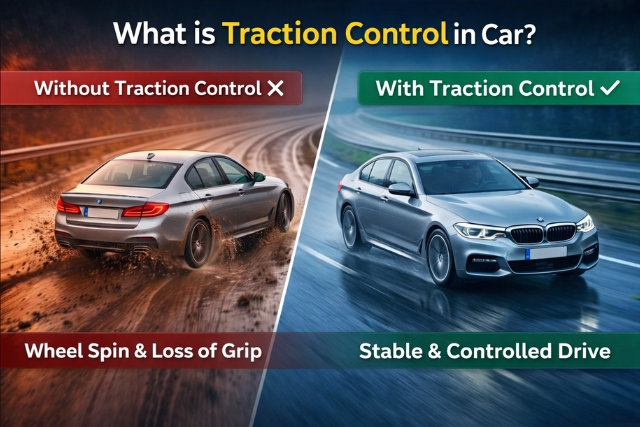
To put it simply, what is traction control in a car refers to a safety feature designed to prevent your wheels from losing grip while accelerating. As soon as a wheel's speed exceeds that of the others, the system initiates an intervention.
TCS, or Traction Control System is responsible for monitoring how fast the car's wheels are spinning with multiple sensor inputs. If there is excess tire slip due to an individual wheel(s), TCS will reduce the engine's power, or will apply brake pressure to the affected wheel(s) in order to keep the car stable and help to reduce the chances of skidding out of control.
Why It Matters:
- Improves safety on wet or icy roads
- Enhances vehicle stability
- Reduces tire wear
- Supports better acceleration control
The use of traction control in cars has become standard in most modern vehicles because it significantly lowers the risk of losing control during sudden acceleration.
How the Traction Control System in a Car Detects Wheel Slip
The traction control system in cars is an electronic safety system connected to the Anti-lock Braking System (ABS). Both systems share wheel speed sensors.
Here’s how it functions:
- Wheel speed sensors monitor rotation.
- The system detects uneven spinning.
- Engine power is reduced automatically.
- Brakes may be applied to specific wheels.
Unlike older cars, modern vehicles manage this process seamlessly. Drivers often notice a flashing traction control light on the dashboard when the system is active.
Step-by-Step: How Does Traction Control Work in a Car?
Many drivers ask, how does traction control work in a car? The answer lies in smart electronic monitoring.
When you press the accelerator too hard on a slippery surface:
- One wheel may spin faster than others.
- The system detects this difference instantly.
- Engine torque is reduced.
- Brake force is applied to restore grip.
This entire process happens within milliseconds.
Example Scenario:
Picture yourself driving on a freeway approaching a signalized intersection (stoplight) with just the traffic light turning green. There are two things happening at that instant -- first you are trying to get through this red light as fast as possible, but the second thing that's occurring is that you are nervous about the road conditions -- it has rained and has no traction control. The slippery road could cause loss of traction which would cause you to lose control of your vehicle when going through the signalized intersection. The addition of traction control would remove any restriction on the amount of slip which would give you more control of your vehicle than without it.
That’s the practical use of traction control in cars in everyday driving.
Key Components of Traction Control System
Each component works together to ensure smooth operation.
Use of Traction Control in Cars
The use of traction control in cars goes beyond just slippery roads. It also helps during:
- Sudden acceleration
- Driving on gravel or sand
- Uphill starts
- Sharp turns
In high-performance vehicles, traction control improves acceleration efficiency without sacrificing stability.
When Should You Turn Off Traction Control?
Although it’s generally recommended to keep it on, there are rare cases when drivers may disable it:
- When stuck in deep snow or mud
- Off-road driving situations
- Performance track driving
In these cases, controlled wheel spin may help free the vehicle. However, for everyday driving, keeping traction control enabled is safer.
Traction Control vs Stability Control
Many drivers confuse traction control with electronic stability control (ESC). Here’s a simple comparison:
Both systems complement each other but serve different roles.
Benefits of Traction Control
Understanding what is traction control in car also means recognizing its advantages:
- Reduces accident risk
- Improves handling in bad weather
- Enhances driver confidence
- Minimizes tire damage
- Works automatically without driver input
In modern vehicles, traction control is part of an integrated safety system designed to keep you secure in unpredictable driving conditions.
Does Traction Control Improve Fuel Efficiency?
In an indirect way, the system is able to provide an effective delivery of power by stopping wheel spin from happening. Its primary concern is safety, rather than fuel economy even though it also will improve fuel economy.
Common Signs Traction Control Is Working
- Flashing traction control light
- Slight reduction in engine power
- Mild braking sensation
- Better traction when driving on wet roads
A warning light indicating "check traction control" before your tires begin to lose grip could be an indicator of malfunctioning traction control, there is a need for repair, or it will require adjustment.
Conclusion
As you've learned about what is traction control in a car and its impact on the driving experience, you should realize how useful this feature is today. A traction control system can help keep the tires in contact with the road which enhances vehicle stability and safety.
When driving in various weather, road conditions, and places, knowing how does traction control work in a car, what a traction control system in car gives drivers peace of mind. With modern use of traction control in cars today are much safer and smarter because of the benefits of traction control's additional capabilities than ever before.
Frequently Asked Questions (FAQs)
1. What is traction control in a car in simple words?
Traction control is a system that stops your car from going out of control when it accelerates fast; helps to keep your tires from spinning too much on wet or iced road surfaces (as an example of slippery roads).
2. What’s the use of Traction Control in Cars?
You will help a car maintain its traction by managing how much power is sent to an axle or by applying brakes to that wheel in order to regain lost traction.
3. How does Traction Control Work in a Car without Input from the Driver?
Sensors read as the wheel speeds go and when they detect slippage they send information to the vehicle's computer which will either reduce engine power to maintain traction or apply braking force to the wheel to regain traction.
4. Should traction control always be on?
Yes, for normal road conditions.It enhances your safety and decreases the likelihood of losing traction due to skidding.
5. Is Traction Control Similar To ABS?
Traction Control and ABS Systems Are Distinct. Anti-Locking Brakes Help Prevent Rollover by Preventing Brakes Lock Up While Brakes Prevent Loss Of Wheel Rotational Motion By Providing Remedial Torque to Maintain Wheel Rotation Regardless Of The Force Applied To The Wheel.